

Winter flowers used to mean glossy poinsettias and crisp white lilies. This year, the palette has shifted. Dark florals — burgundy, plum, near-black — are moving into homes and dinner tables as the season's defining look. Moody winter flower arrangements pair naturally with the low light of the season, and a candlelight flower arrangement in particular can turn an ordinary evening into something that feels considered. Here's what makes the trend work, which blooms carry it, and how to bring it into your own space.
Why Jewel-Tone and Dark Florals Are Having a Moment This Winter
Florists point to the same shift for 2026: jewel tone flowers replacing the softer, pastel-heavy arrangements that dominated recent seasons. Deep wine, plum, sapphire, and blackened green are showing up in centerpieces and gift bouquets alike, often set against dark foliage that lets each bloom read as saturated rather than washed out under indoor light.
Part of the appeal is practical. Winter days are short, and most flowers end up displayed under lamp or candlelight rather than daylight. Pale petals can look flat in that setting. Darker tones do the opposite — they hold their color and gain depth as the light dims, which is part of why this winter floral trend for 2026 has taken hold so quickly.
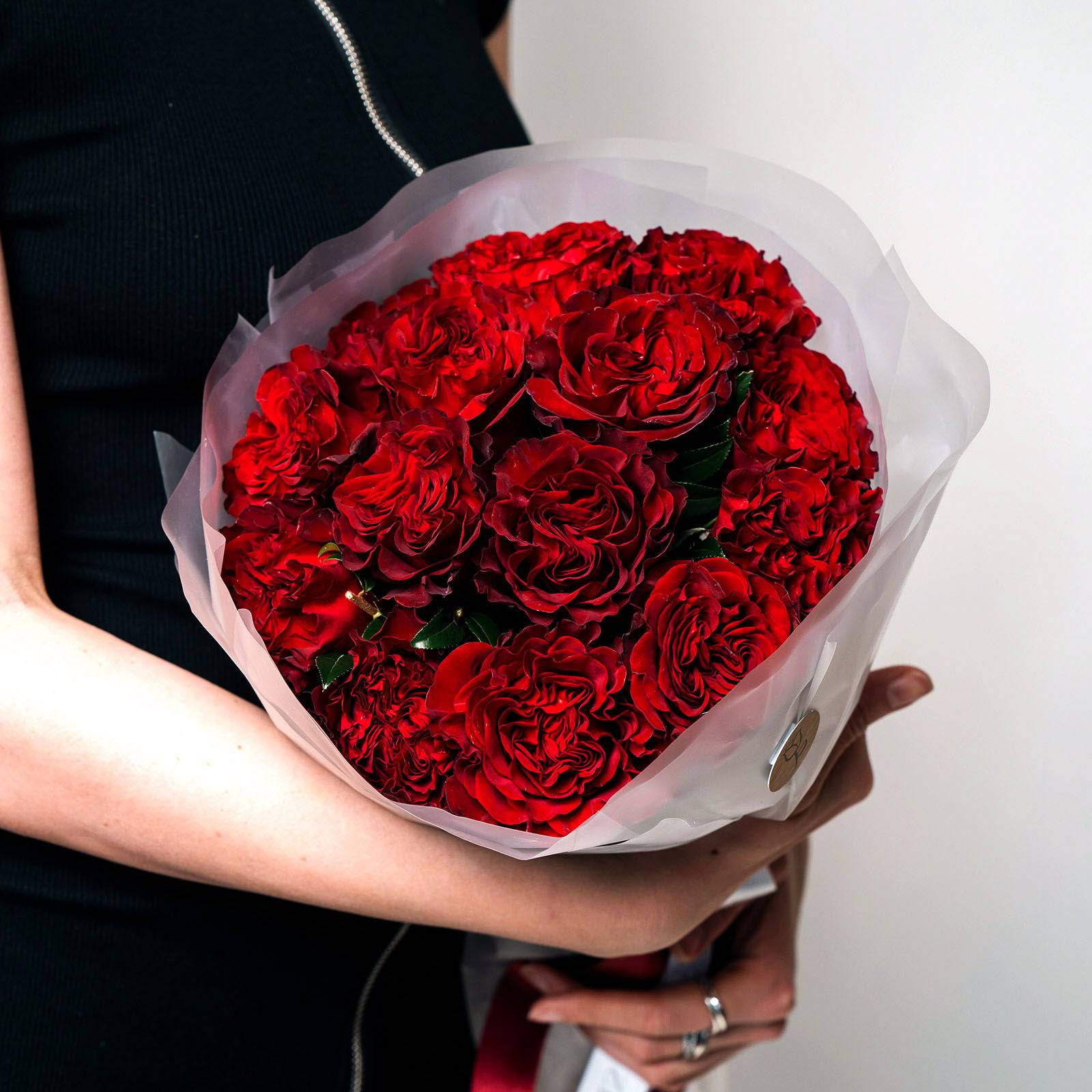
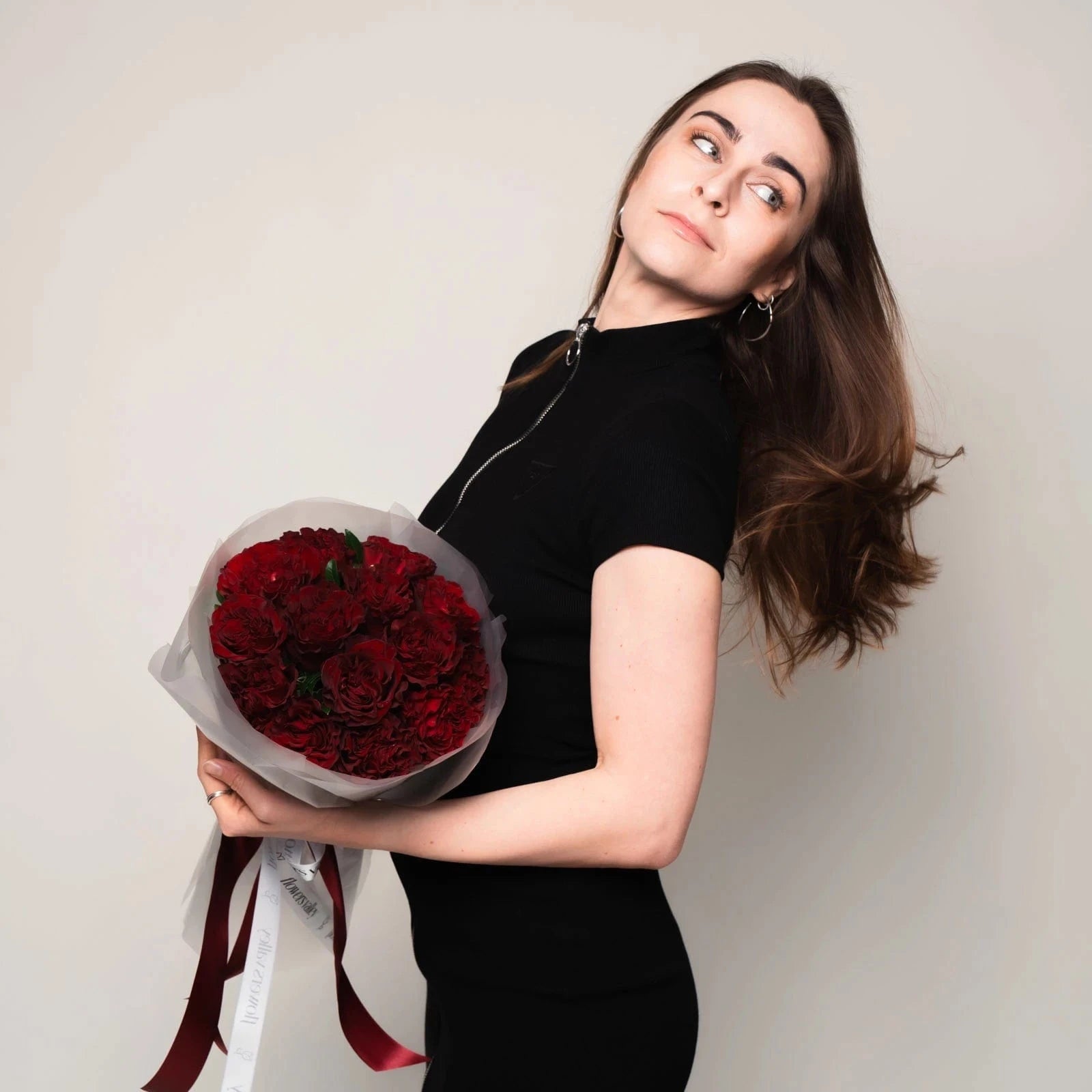
Burgundy dahlias are one of the clearest examples: full, layered blooms that read as rich rather than heavy, even in a small arrangement. Paired with dark red roses, they anchor a bouquet with weight and warmth instead of the brighter red-and-white combinations winter florals have leaned on for years. Together, the two make a strong entry point if you're trying the look for the first time — familiar shapes, unfamiliar color.

The Best Dark Blooms for a Moody Winter Bouquet
Building a dark and dramatic bouquet comes down to layering a few key textures rather than reaching for a single "black flower." True black blooms are rare — most of what reads as black is actually a very deep burgundy, plum, or aubergine that shifts with the light.
Plum ranunculus is one of the most versatile starting points. The tightly layered petals catch light in a way that adds texture without adding bulk, and the color sits comfortably between burgundy and violet, which makes it easy to combine with almost anything else on this list. Deep purple orchids bring a different kind of drama — sculptural, a little architectural, and useful as a focal point rather than filler.
For a fuller burgundy flower arrangement, chocolate cosmos and black roses are worth knowing even if they aren't always in season. Both carry a velvety, almost matte quality that photographs beautifully under low light. Bronze and burgundy chrysanthemums are a practical winter substitute when those are hard to source — hardier, longer-lasting, and closer to the season.
The trick is contrast. A bouquet built entirely from dark tones can start to disappear into itself, especially in a dim room. Leaving in a little pale foliage, a cream accent, or even just the natural variation between deep red and near-black keeps the arrangement readable instead of flat.

Styling Flowers for a Candlelit Table
Flowers for a candlelit dinner table need to be considered differently than flowers meant for daylight. Candlelight is warm, low, and directional, which means height and shape matter more than usual — tall centerpieces can block sightlines across a table, while something too low gets lost once the candles are lit.
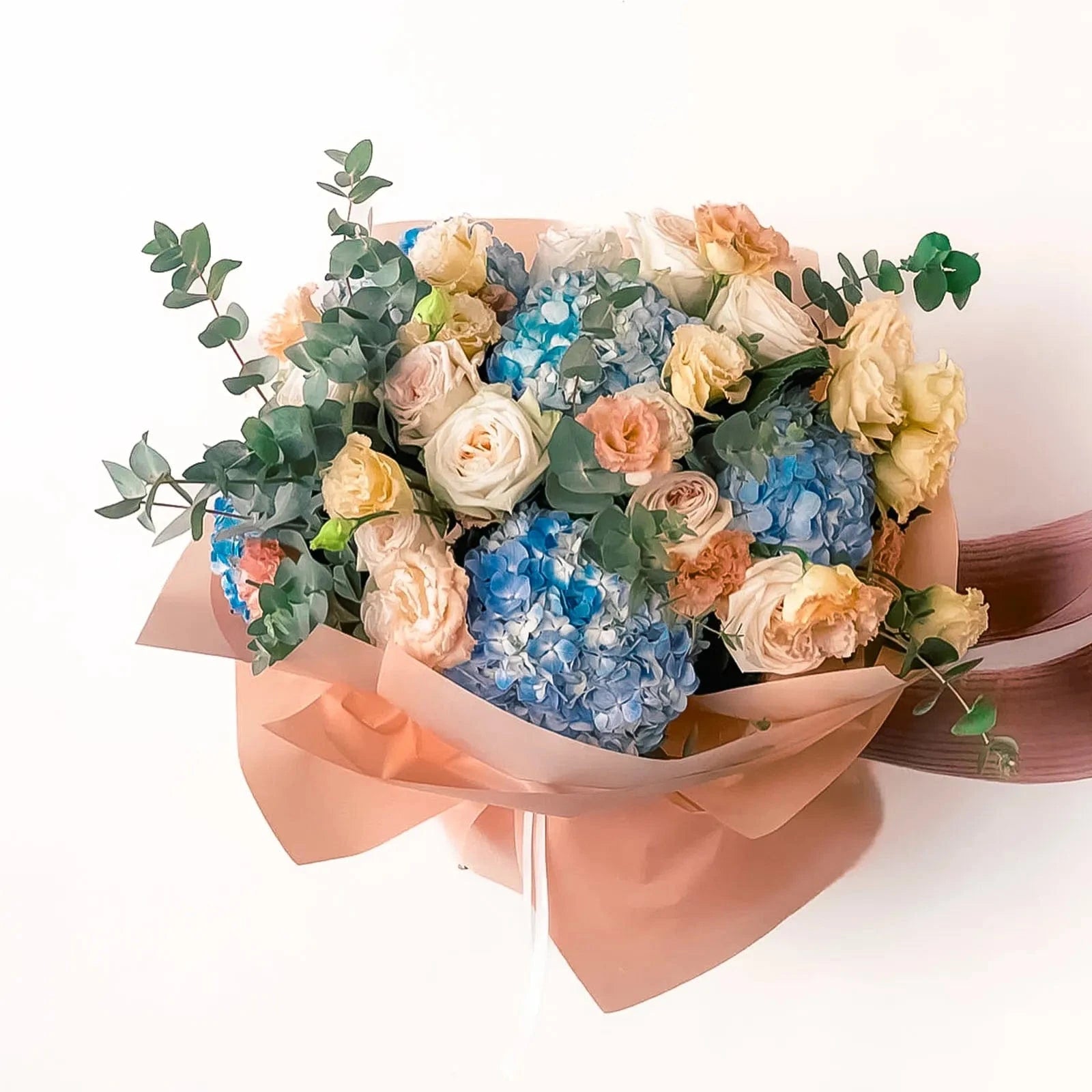
A low, dense arrangement usually works best. Jewel-tone hydrangea is a good base for this: it takes up visual space without demanding height, and its many small petals catch flickering light in a way that single large blooms don't. Build outward from there with a few taller, darker stems for contrast, kept just above the candle line so they don't cast shadows across place settings.
If you're learning how to style a moody winter flower arrangement for the first time, start smaller than feels necessary. Dense, oversized centerpieces tend to compete with candlelight rather than complement it. A cluster of three smaller arrangements down the length of a table, rather than one large piece in the center, usually reads as more intentional — and it lets the candlelight move between them instead of being blocked by a single dense shape.
Bringing the Trend Home
Trying this out doesn't require a full redesign of your table settings. A single well-built arrangement can carry the look on its own, especially if you're hosting and want dark floral arrangement ideas for a dinner party that feel put-together without much extra styling.
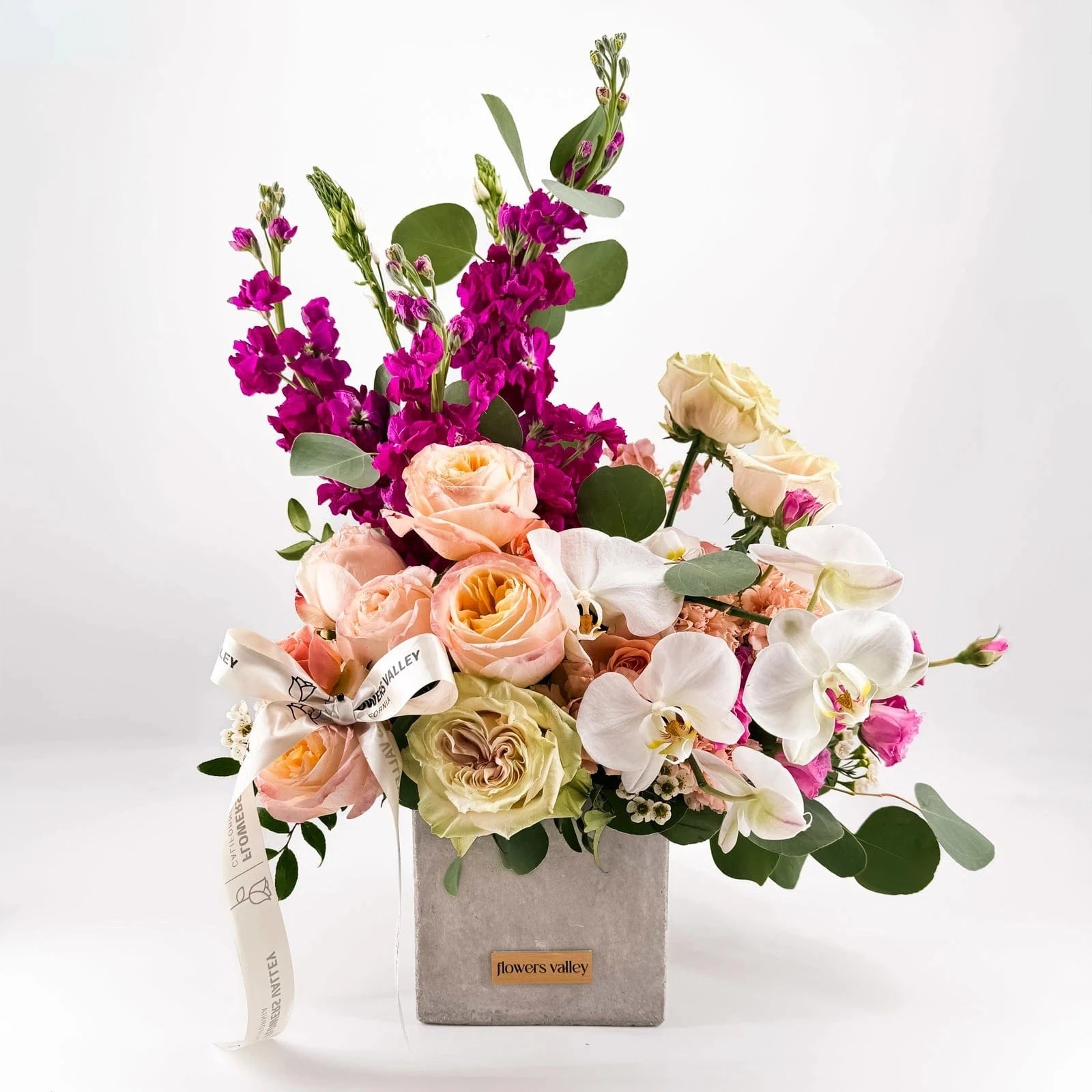
If you're not sure where to start, the Signature Collection includes several arrangements built around this season's deeper palette, already balanced for color and texture so you're not guessing at combinations. For anyone deciding the day of an event, same-day flower delivery covers most of the timing pressure that comes with last-minute hosting.
Anyone searching for the best dark flowers for a winter centerpiece is usually working against a deadline of some kind — a dinner, a holiday gathering, a change of season in the house. Flowers Valley delivers throughout the San Francisco Bay Area, so the arrangement can arrive ready to place on the table rather than needing to be built from separate stems.

Frequently Asked Questions
How do you style flowers for a candlelit dinner table?
Keep arrangements low and slightly off-center so they don't block sightlines once the candles are lit. Dense, textured blooms tend to catch flickering light better than a few large, spaced-out stems.
What flowers count as "dark florals"?
Deep burgundy, plum, aubergine, and near-black shades of otherwise familiar flowers — dahlias, roses, ranunculus, and orchids among them. True black blooms are rare; most "black" flowers are simply very saturated dark tones.
Do moody floral arrangements work outside of weddings?
Yes. The palette has moved well past bridal use and into everyday winter styling — dinner tables, gifts, and home decor all suit the look, particularly once the days get shorter and rooms are lit more by lamp or candle than daylight.
How long do jewel-tone and burgundy flowers typically last?
Most last five to ten days with regular care — trimmed stems, changed water, and a spot away from direct heat. Darker blooms don't fade the way pale petals do, so any wilting tends to show in the stem and leaves before it shows in the color.




0 comments