

The holidays bring a familiar question to office managers and account teams: what do you send the clients who kept your business running this year? A logo-stamped mug usually gets pushed to the back of a cabinet shelf and forgotten. Gift baskets feel impersonal once you're ordering more than a few. Corporate holiday gifts for clients work best when they say something specific — that the relationship was noticed, not just maintained. Flowers do this quietly. A well-chosen arrangement of client thank-you flowers reads as personal without overstepping, professional without feeling cold, and arrives ready to enjoy rather than another item to manage. This guide covers what to send, what to skip, and how to make corporate holiday gifting flowers simple enough to repeat every year, no matter how many clients are on your list.
Why Flowers Make a Meaningful Corporate Holiday Gift
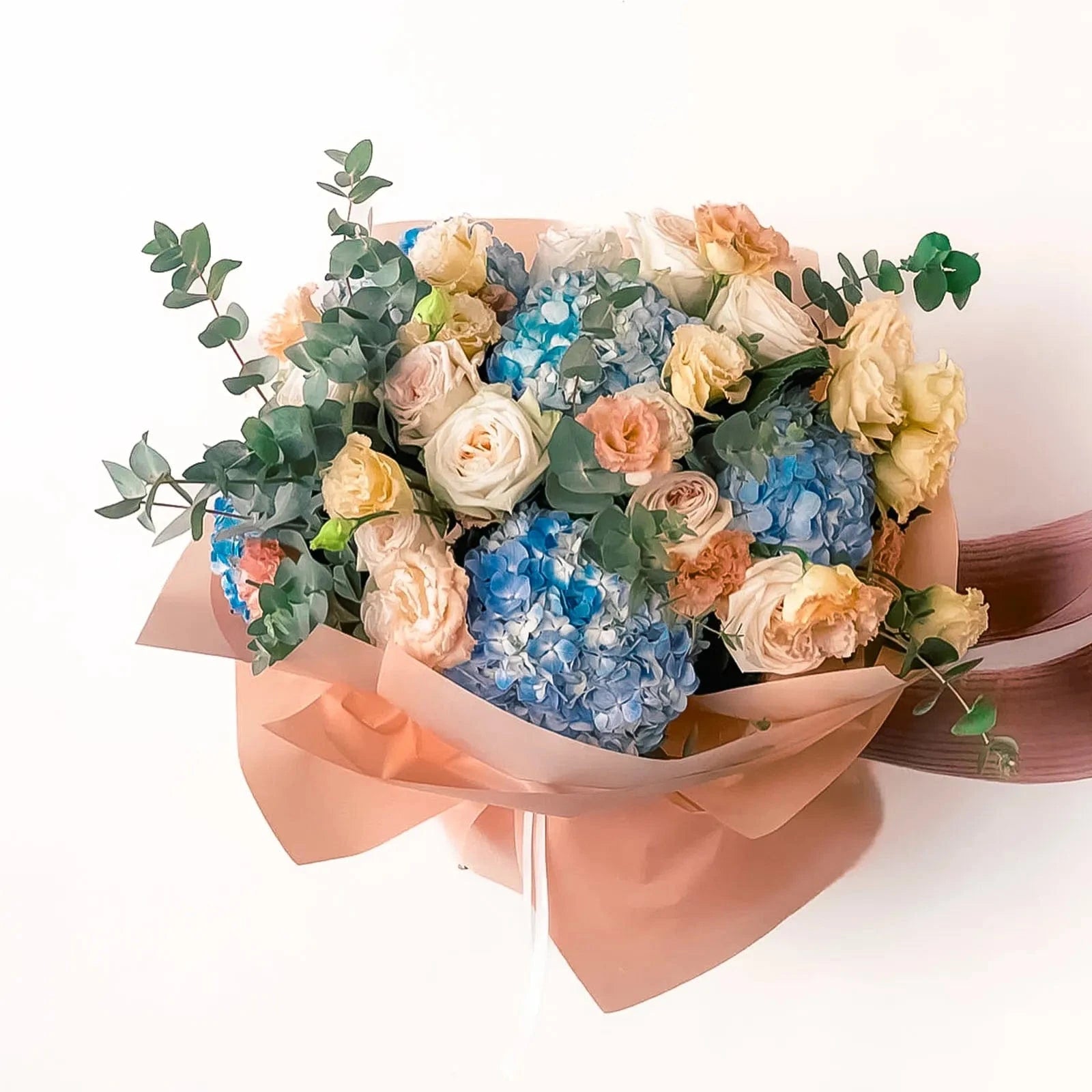
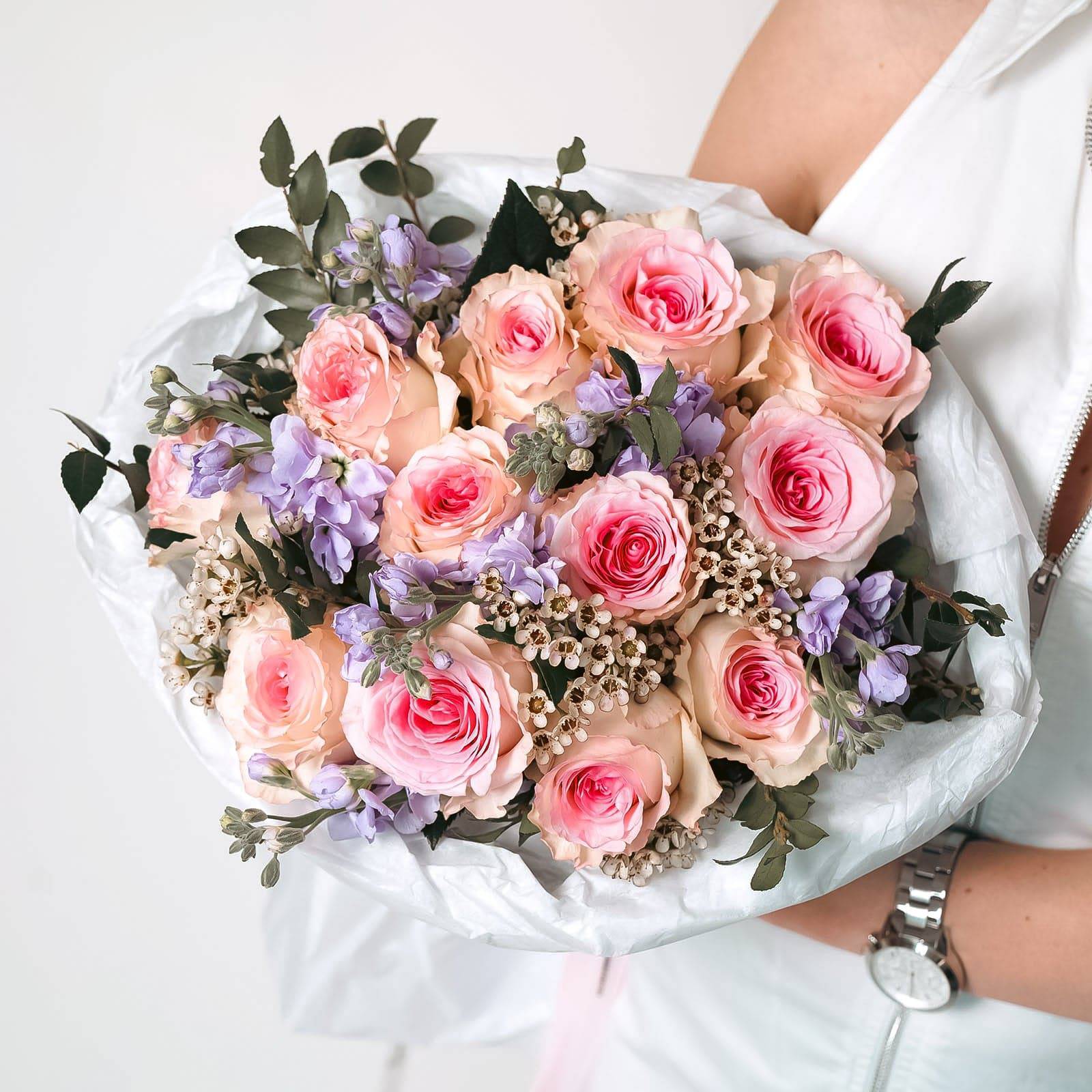
Most corporate gifts are chosen for shelf life. Flowers as corporate gifts work differently — they're meant to be used right away, which is part of the appeal. A bouquet doesn't sit in a closet next to last year's gift, unopened. It goes on a desk or a reception counter, where it gets noticed by the client and by everyone who walks past their office that week.
There's also a practical advantage. Flowers scale without losing their personal feel. Sending the same thank you flowers to twenty clients doesn't read as generic the way twenty identical tote bags would, because each arrangement still arrives fresh and specific to that office. For corporate holiday gifts for clients you've worked with over a full year of meetings and invoices, that small distinction matters more than the price tag. It also fits a broader move toward understated gifting this year — a flower arrangement carries no logo and needs none.
Budget plays a role too. Flowers can be scaled up or down by size and stem count without changing the category of gift, so a small client and a major account can both receive something appropriate without one gift looking obviously larger than the other.


Business Flower Etiquette: What to Send (and What to Avoid)
Business flower etiquette exists for a reason: flowers carry meaning, and the wrong message can undercut an otherwise generous gesture. Red roses are the clearest example. Reserved for romantic relationships, they're rarely the right choice for a client, no matter how long you've worked together.
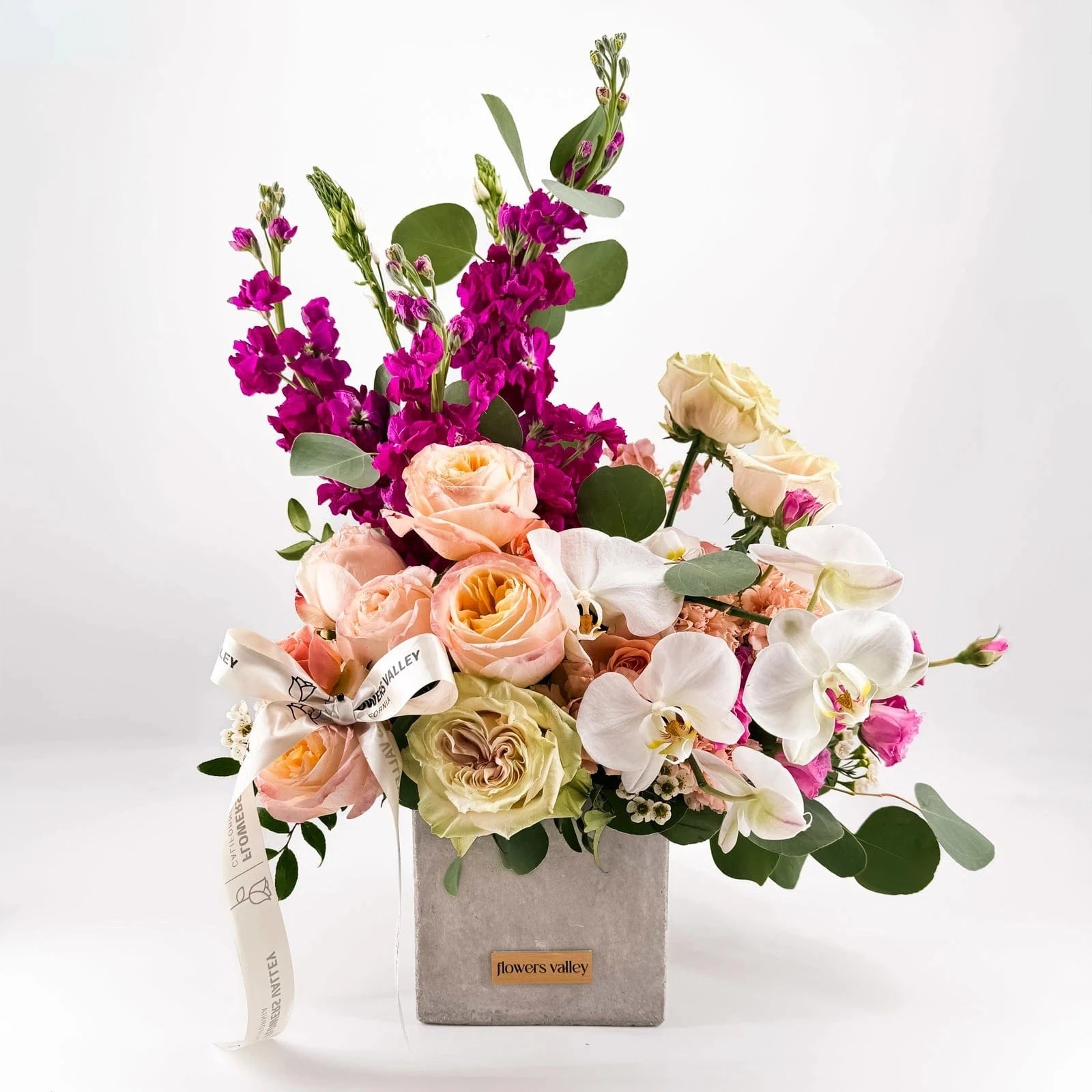
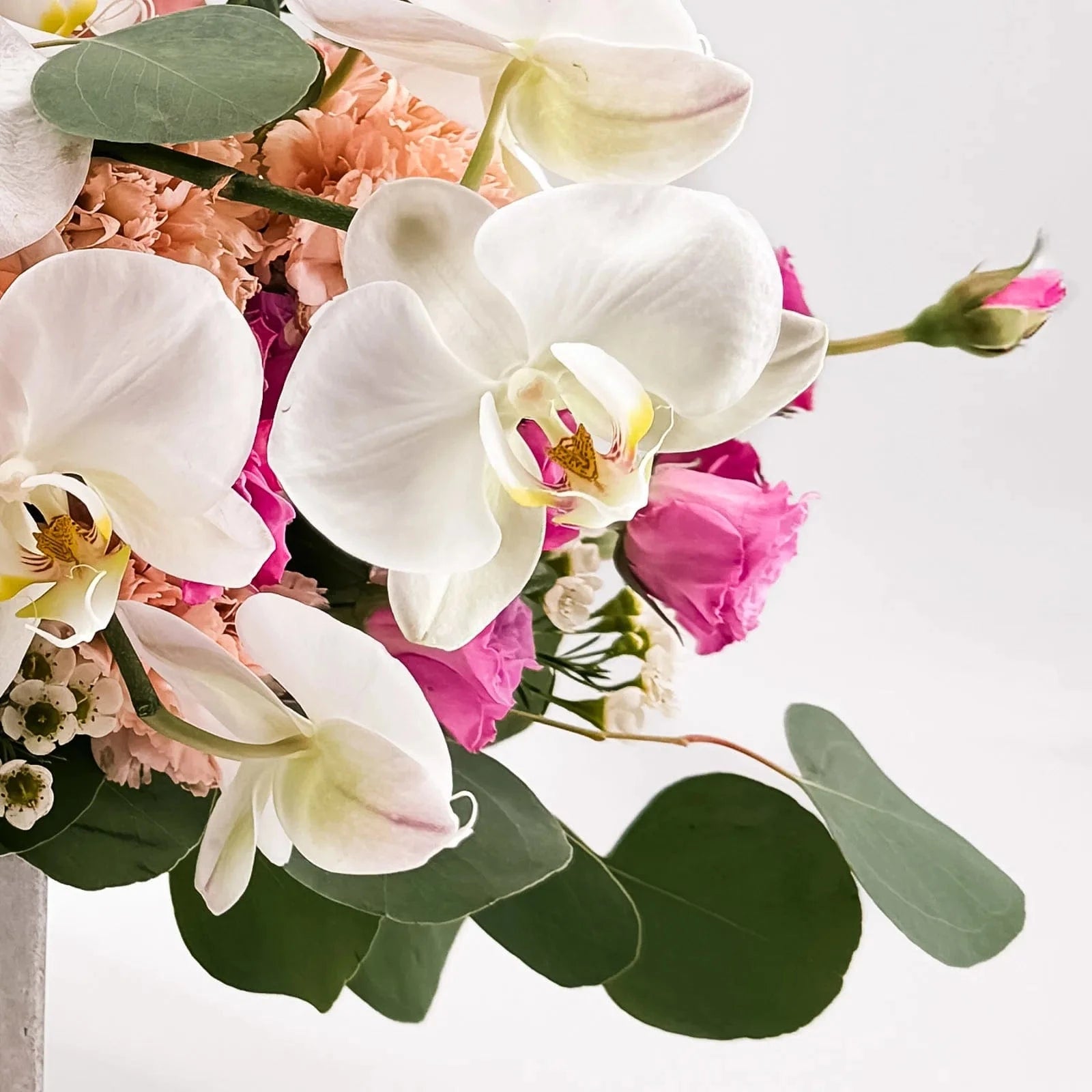
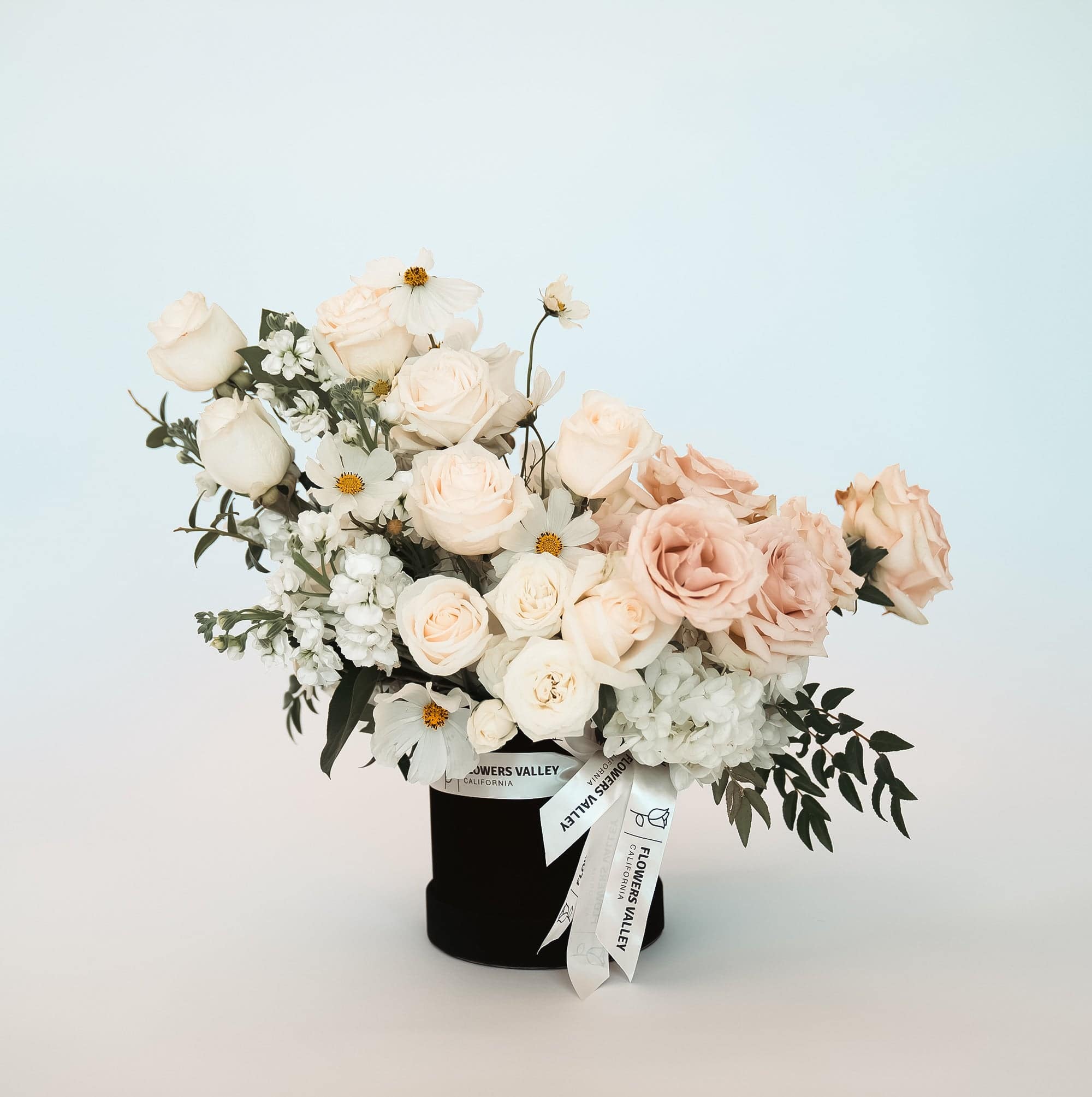
Office-appropriate flowers lean neutral. Stick to a palette of white, yellow, and soft green — it keeps an arrangement looking composed instead of intimate. White orchids are a reliable choice for long-standing clients or senior contacts — understated, long-lasting, and free of romantic connotation. For a warmer, friendlier tone, yellow roses signal appreciation and goodwill without crossing into anything more personal.
A couple of other rules are worth keeping in mind. Skip heavily scented varieties, since not everyone in a shared office can tolerate strong fragrance. The card matters as much as the flowers. Skip the generic "Happy Holidays" line and reference something specific instead — the project you worked on together, or a particular milestone from the year. If you work across different regions or cultures, it's also worth checking whether a particular flower or color carries a meaning you didn't intend before it ships.
Best Holiday Flowers and Arrangements for Client Gifting
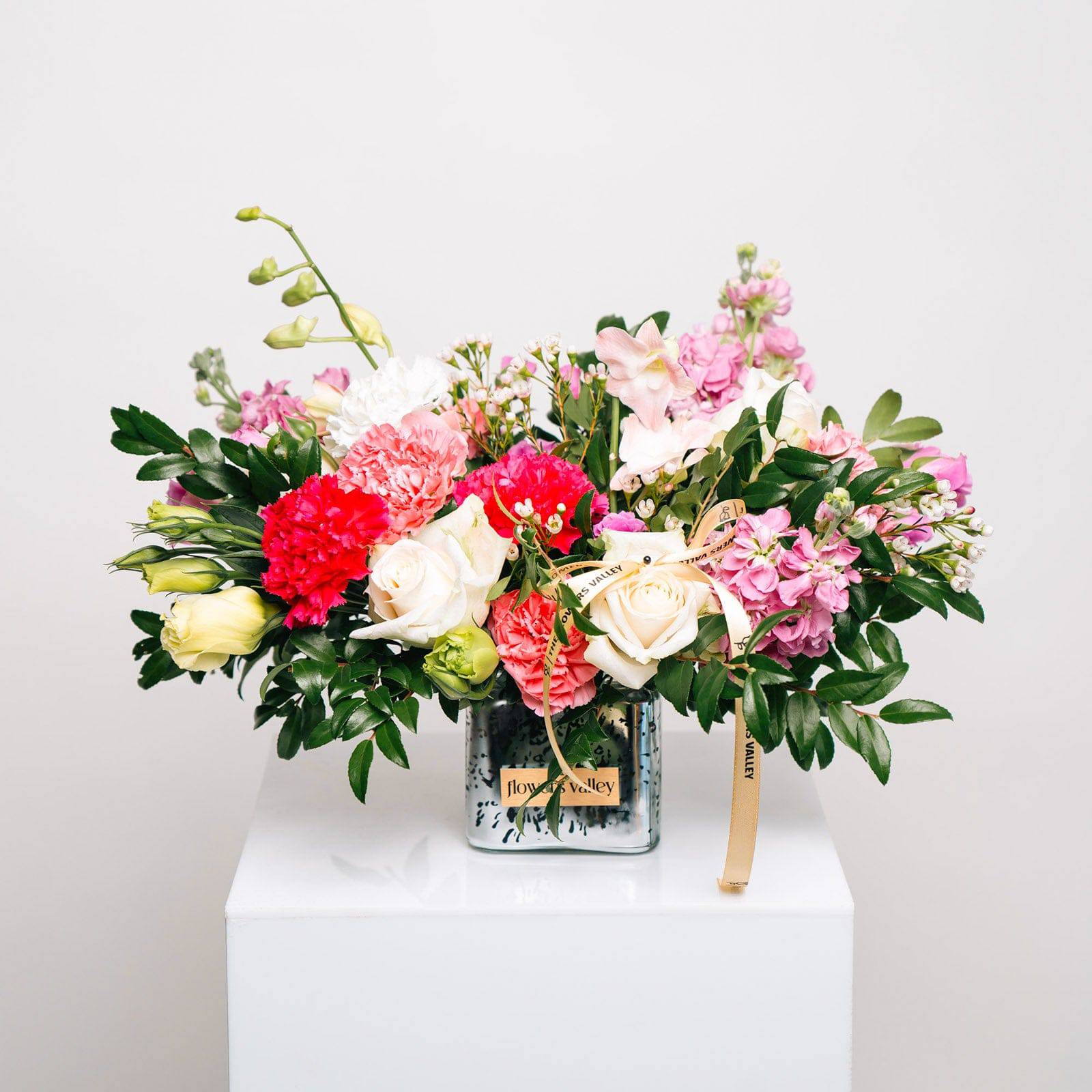
Seasonal arrangements give corporate gifting an easy structure to work from. Our holiday flower arrangements combine amaryllis, white roses, and seasonal greenery in compositions built for a desk or reception area — festive without tipping into novelty.
For clients with a storefront, lobby, or shared office space, Christmas wreaths offer a different kind of gift, one that decorates their space rather than sitting on a single desk. A wreath on a client's door or reception wall stays visible through the season, which extends the impression of the gift well past the day it arrives.
If you're choosing between the two, consider the setting. A desk-based client relationship calls for an arrangement. A client with public-facing space benefits more from something that decorates the entrance they and their customers walk through daily. For clients you send gifts to every year, alternating between the two from one season to the next keeps the gesture from feeling repetitive.
Making Client Gifting Effortless Year-Round
Holiday gifting often turns into a scramble because it's planned once a year, under deadline. With a business flower subscription, client appreciation gifts go out on a set schedule instead of being arranged from scratch each year — turning the December rush into a single recurring order rather than a dozen separate ones.
This approach also solves a quieter problem. Year-end client gifts tend to get judged against what a client received the year before. A subscription keeps the gesture consistent without requiring anyone on your team to remember exact delivery dates or re-research arrangements each November. This flexibility carries past December, too. The same subscription can cover a contract renewal, a referral, or a quiet stretch where a client hasn't heard from you in a while.
For firms managing more than a handful of key accounts, that consistency tends to matter to the relationship more than any single gift does. It also frees up the person managing client gifting from rebuilding a list and a budget from scratch each year.


Timing and Delivery: Getting Flowers to a Client's Office On Time
Corporate flower delivery has a narrow window during the holidays. Most offices close for an extended stretch at year-end, so arrangements sent too late either sit unattended over the break or arrive after the team has already left. For holiday flowers for the office, the safest delivery window sits in the week before mid-December — late enough to feel timely, early enough that the full team still sees it before the slowdown sets in.
For last-minute additions to a gift list, same-day flower delivery covers the client who got added late, or the thank-you that needs to go out the same day a deal closes. We deliver throughout the San Francisco Bay Area, with options to schedule ahead for the whole season or place a single order as the need comes up. If you're coordinating gifts for several offices at once, scheduling deliveries a few days apart can also help each one land with its own moment of attention, rather than all arriving on the same Monday morning.
Frequently Asked Questions
Is it appropriate to send flowers to a client during the holidays?
Yes. Flowers are a widely accepted corporate gift, provided the arrangement stays neutral in color and the note stays professional. They work well for clients you've known for years and for new contacts alike, and they read as thoughtful rather than transactional.
What flowers should you avoid sending to a client?
Avoid red roses and anything heavily scented. Both can read as too personal or cause discomfort in a shared office, especially where allergies or fragrance sensitivities are a factor.
Should corporate holiday flowers go to the office or the client's home?
The office, in most cases. Home delivery can feel overly familiar unless you know the client well outside of work, and office delivery lets the gesture be seen by their wider team.
How far in advance should you order client holiday flowers?
Order three to four weeks ahead of your target delivery date, and aim for arrival the week before mid-December, ahead of most office closures and the year-end slowdown.







0 comments