

A bouquet rarely looks the same through a camera as it does sitting on the counter. Colors flatten, light shifts, and small details that caught your eye in person can disappear from the frame entirely. These flower styling tips cover two formats people photograph most: the flat lay, where blooms are arranged on a surface and shot from directly above, and the tabletop arrangement, photographed at eye level as part of a table or room. Both come down to the same basics — which flowers you choose, how the light falls, and what's underneath and around them.

Choosing Blooms That Photograph Beautifully
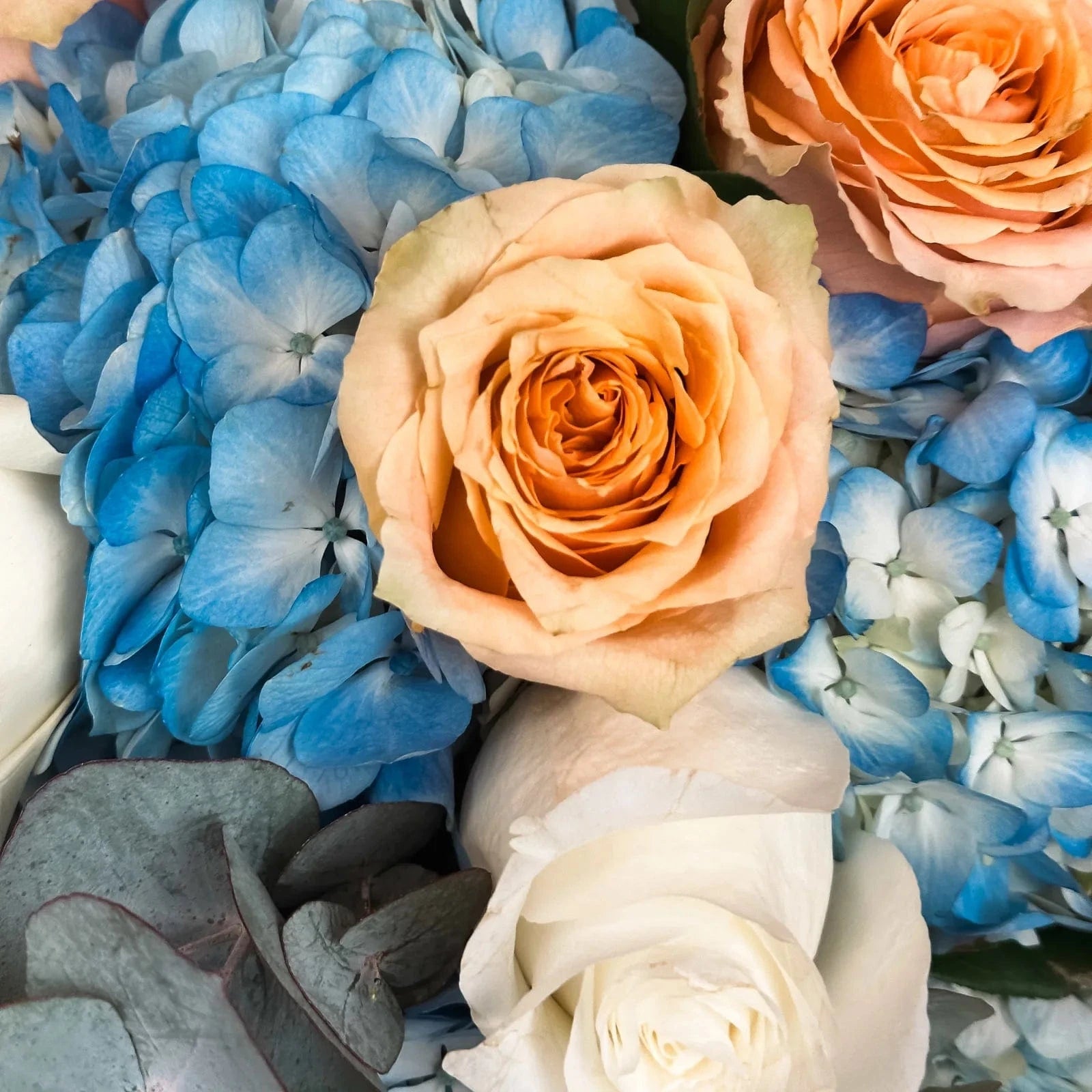
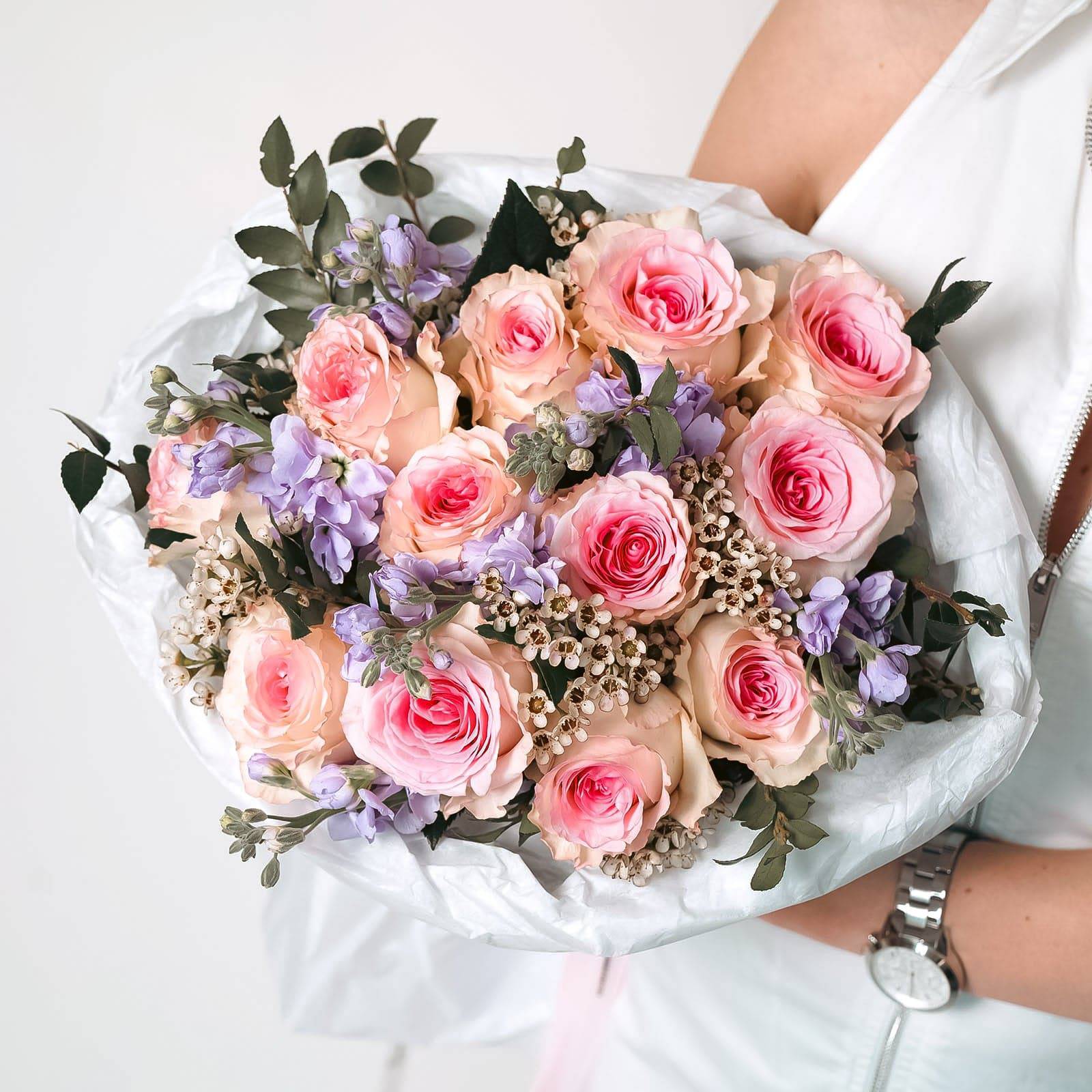
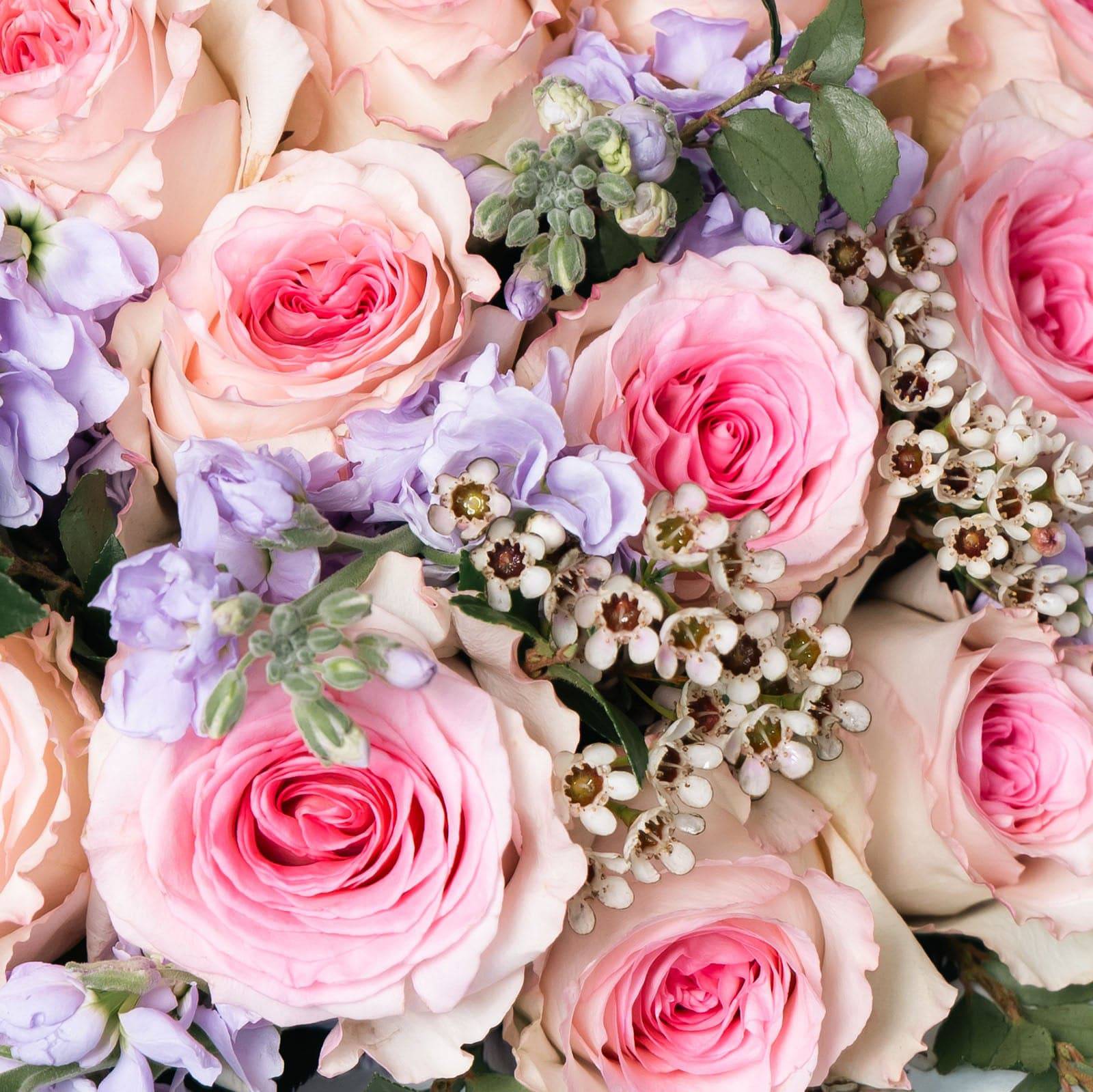
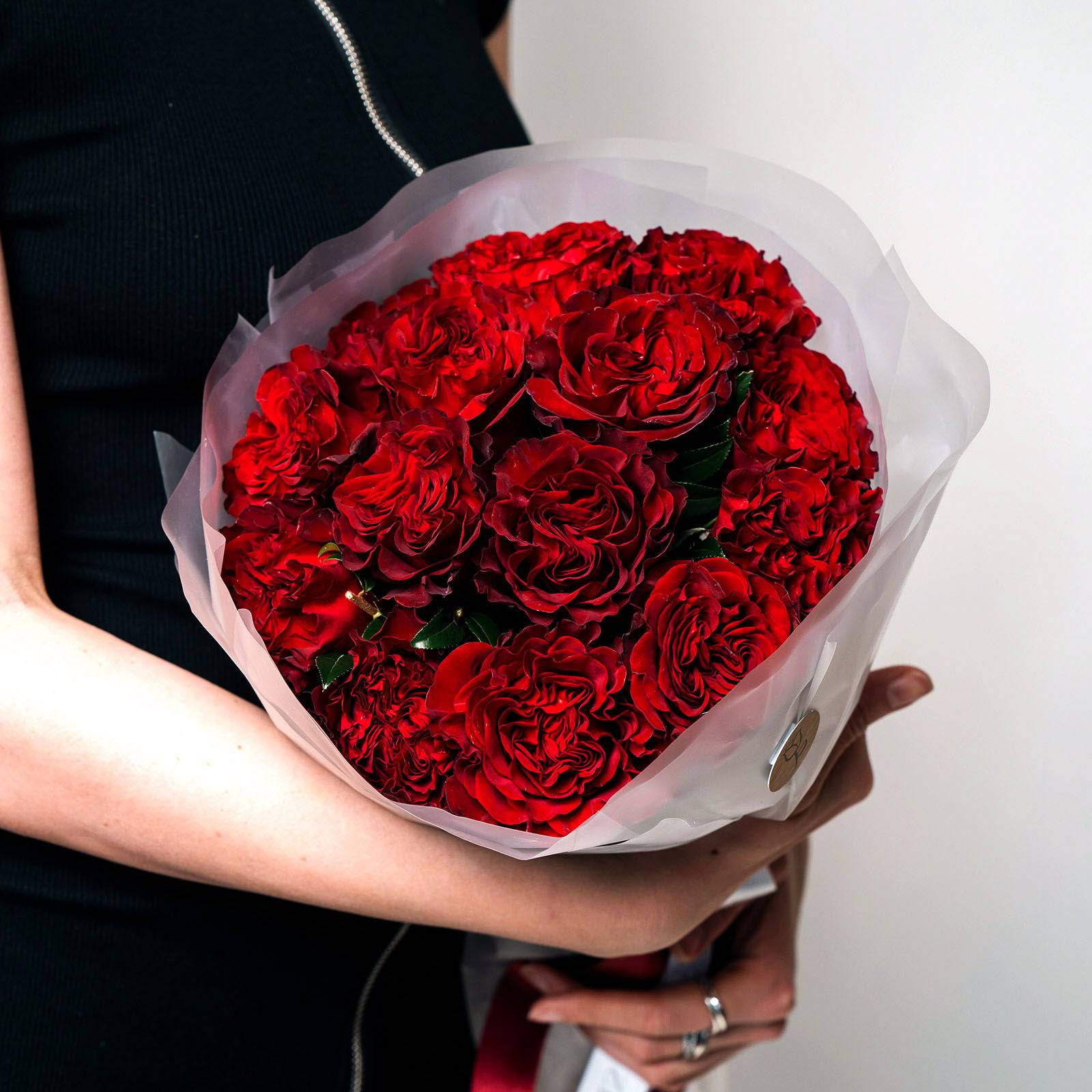
Some flowers hold their shape and color under a lens better than others. For a rose flat lay photo, garden roses are a reliable place to start. Their layered petals catch light from several angles at once, so they read clearly even in a small or cropped frame, and a single stem can anchor an entire composition without looking sparse.
If you're working with more than one type of flower, look for blooms with distinct shapes rather than ones that blend together once flattened. Peonies are useful here. Their full, ruffled heads work as a central focus or tucked among smaller stems, and because each bloom takes up so much visual space, a handful goes further than you'd expect. Our garden roses and peonies are both well suited to this kind of styling — choose stems where the petals have opened slightly rather than tight buds, since open blooms fill the frame and hold their form once arranged.
A mix of bloom sizes also helps. Large flowers carry the composition, while smaller ones fill gaps and add texture without crowding the shot. If everything in the frame is roughly the same size, the photo can end up looking flat regardless of how the light is set.
Setting the Scene: Light, Surfaces, and Backgrounds
Light affects a flower photo more than any styling decision. A spot near a window with indirect daylight will soften shadows and keep petal colors close to how they look in person. Direct sun tends to work against you — it bleaches out lighter petals and creates hard edges between light and shadow that are difficult to soften afterward. If your space allows it, shooting during golden hour, the stretch of time just after sunrise or before sunset, adds a warmer cast that suits most flower colors.
The surface underneath matters almost as much as the light above. For a flat lay, choose something that won't compete with the flowers — a wooden board, a length of linen, or a plain countertop all work well, as long as the texture or color doesn't pull attention away from the blooms. For tabletop shots, the surface becomes part of a larger scene, so it's worth stepping back and looking at what else is visible in the frame. A cluttered table will draw the eye away from the arrangement no matter how it's styled.
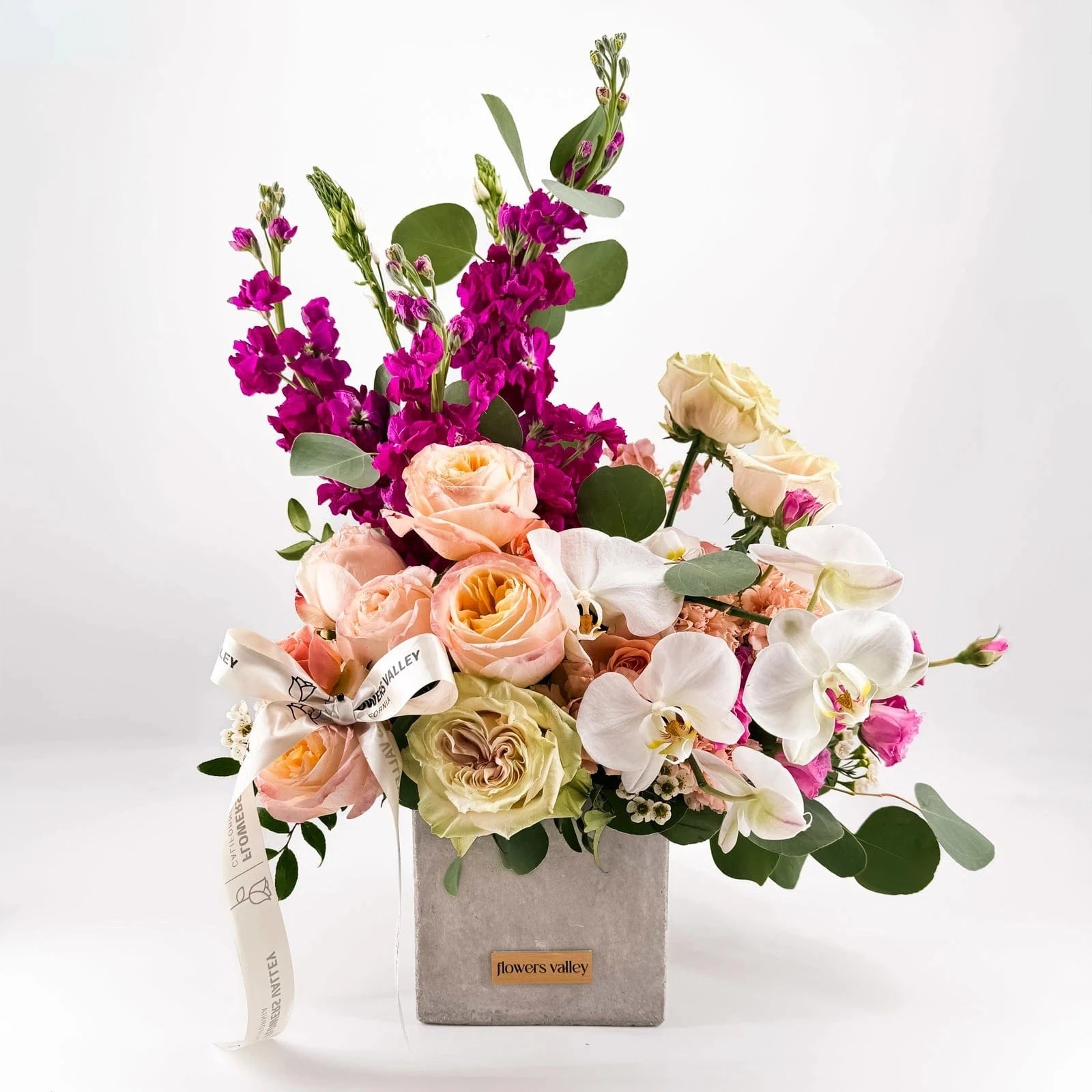
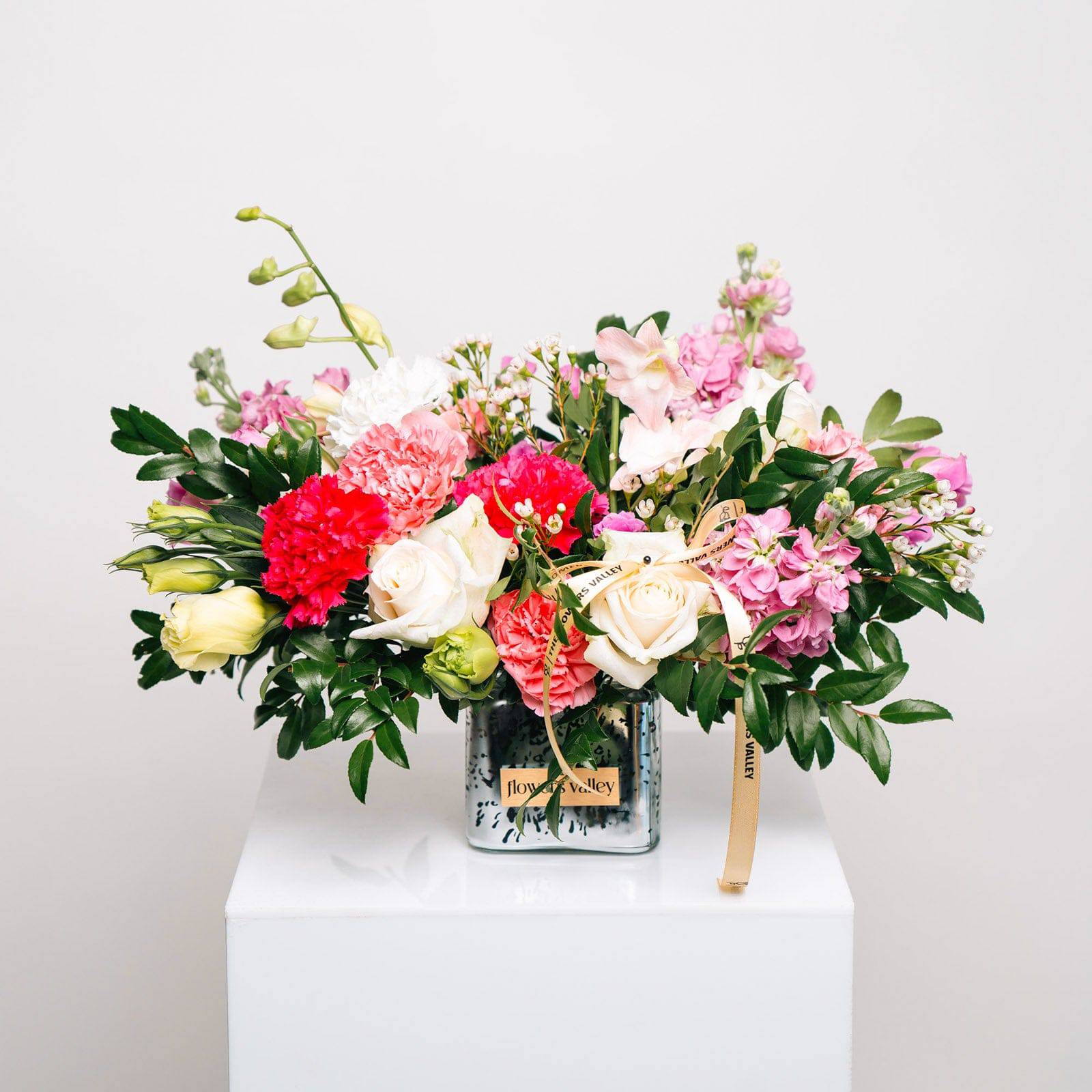
If arranging loose stems isn't something you want to deal with, flowers in vases arrive already composed and can be set directly into a tabletop scene with little adjustment beyond positioning them where the light reaches.


Styling a Tabletop Arrangement Worth Photographing
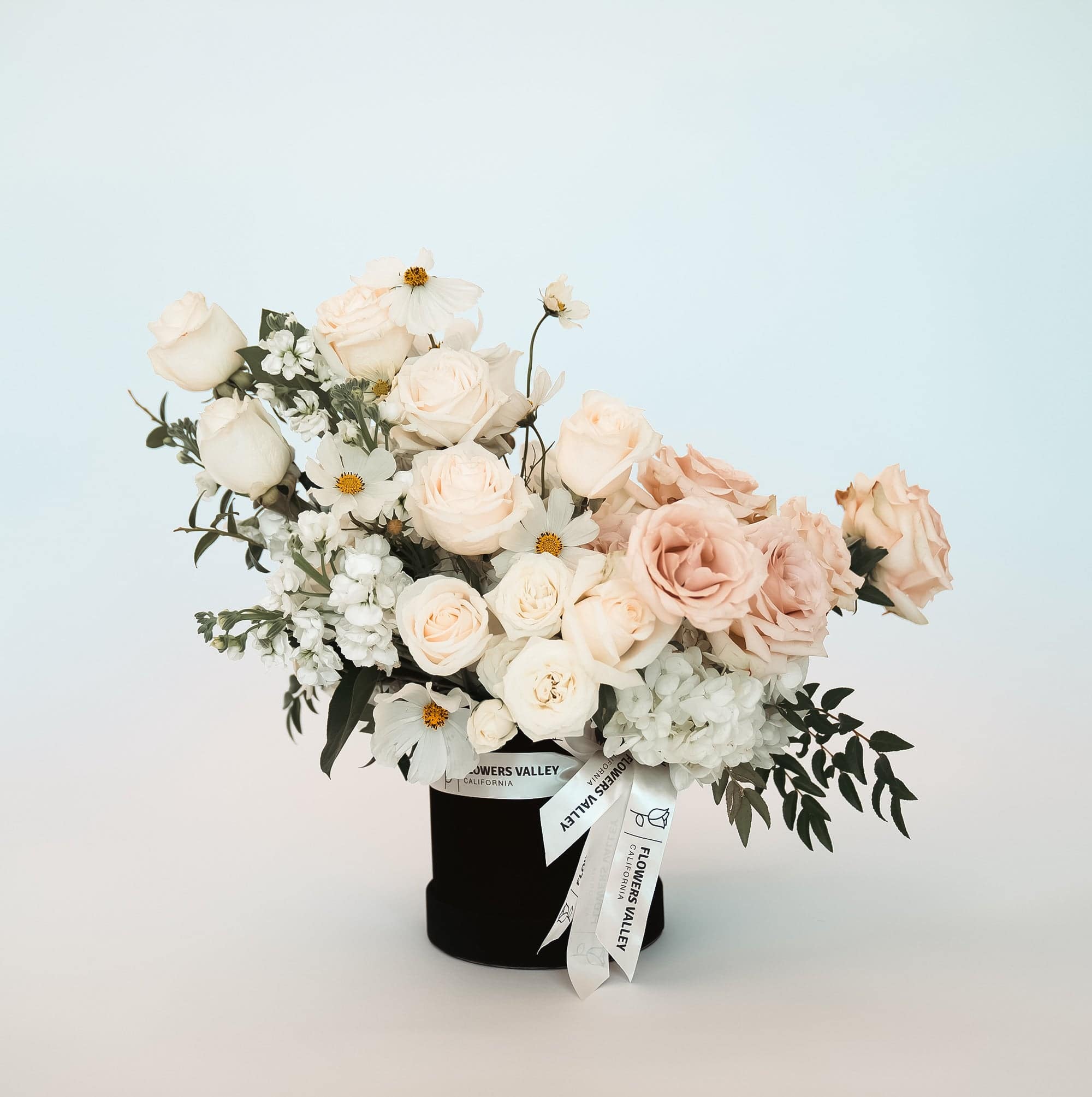
A tabletop arrangement is photographed as part of a space, which means scale comes before bloom choice. A low, wide arrangement sits comfortably on a dining table without blocking the view across it, while a taller arrangement suits a side table or console, where added height gives the eye somewhere to travel.
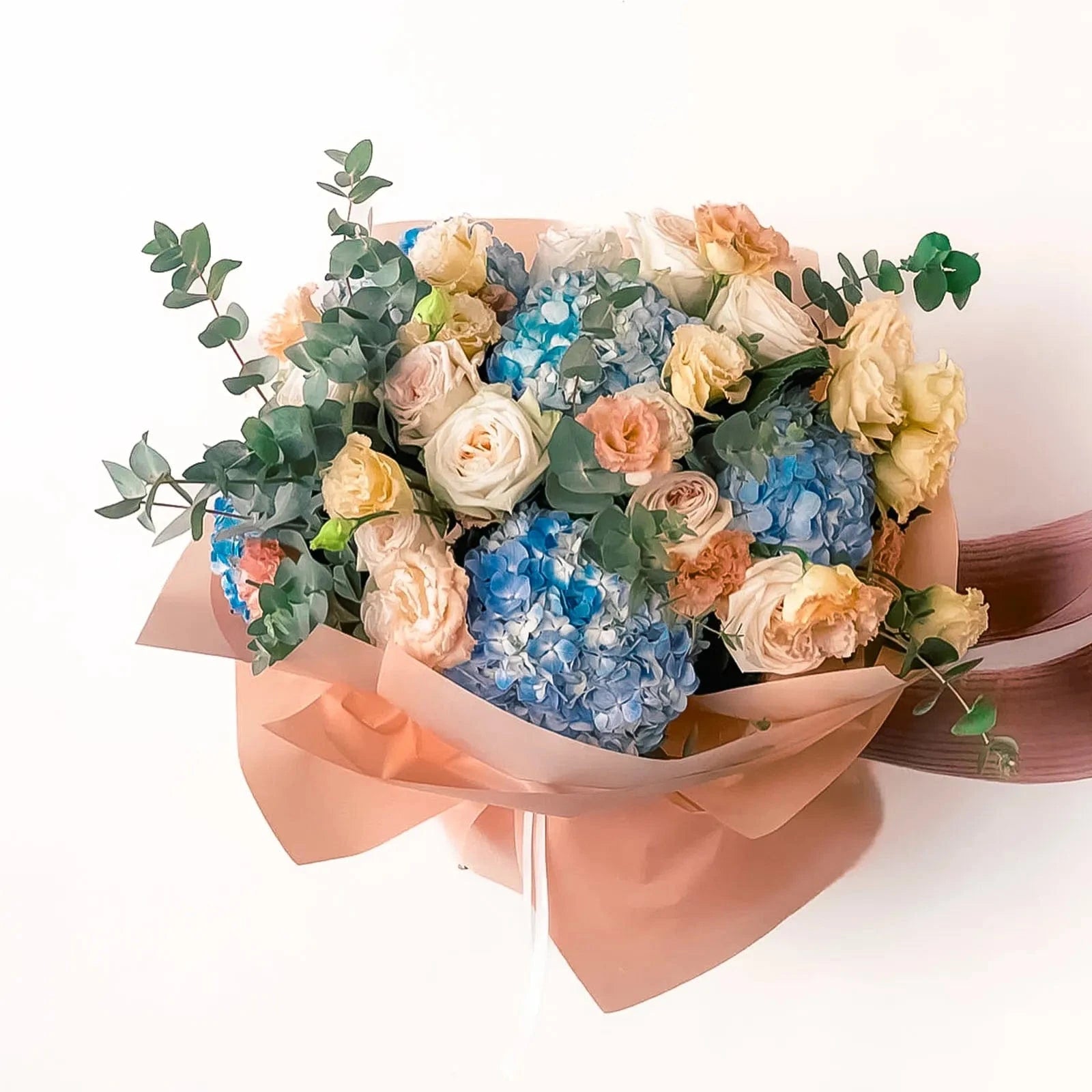
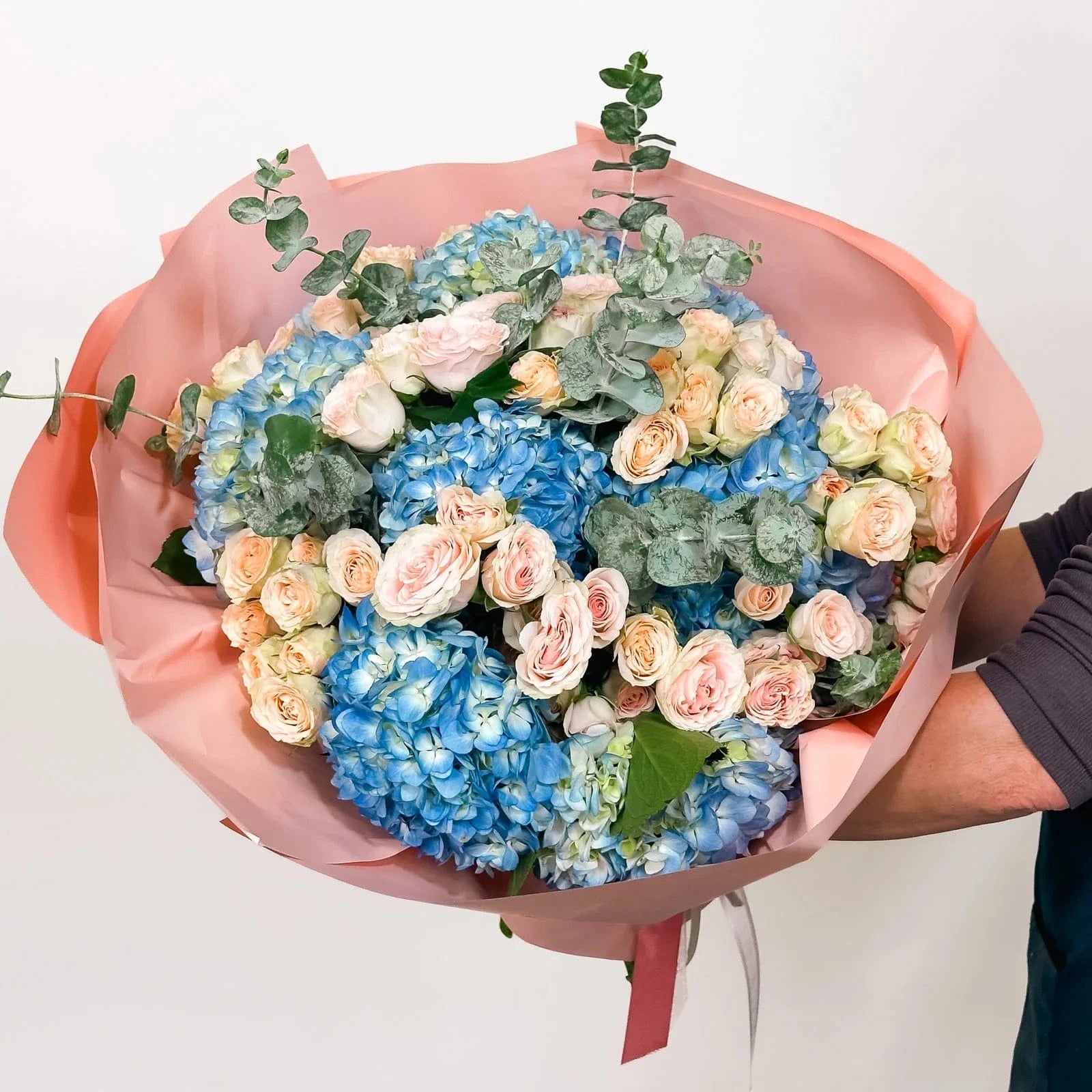
Much of what's circulating in home decor feeds this year falls under the "effortless elegance" flower styling trend — fewer stems, placed with intention, rather than a dense and tightly packed arrangement. A small grouping of mixed bouquets, kept loose instead of compact, often photographs better than something more elaborate, since the gaps between stems give the eye places to rest. For a more pared-back look, mono bouquets offer that single-flower effect without extra work on your end. Trim the stems to the height you want, set the vase where the light reaches it, and the arrangement is largely styled on its own.
Keep whatever surrounds the flowers simple. A candle, a stack of books, or one piece of ceramic can frame the arrangement without competing with it. The aim is for the flowers to read as the main subject in the frame, not one element among several.
Seasonal Blooms and the Curated Imperfection Trend
Working with flowers that are in season tends to produce photos that feel current rather than staged for the occasion. Ranunculus, with their layered petals and soft range of colors, fit into the broader curated imperfection floral trend — arrangements that look gathered rather than assembled, with stems left at slightly different heights and blooms facing in different directions.
For a ranunculus flat lay, scatter a few stems loosely instead of lining them up in rows. Leaving gaps between small groupings, so the surface underneath shows through in places, reads as more natural than a frame packed edge to edge. The same idea applies to tablescape styling ideas more broadly — instead of one large centerpiece, try several smaller groupings spaced along the table, set among whatever's already there: plates, glasses, a folded napkin.
This kind of styling tends to photograph well because it doesn't ask for much setup. A few stems, some open space, and daylight from the side will often outperform an arrangement that's been adjusted for an hour.


Bring the Shot to Life with Fresh, Delivered Blooms
Knowing how to style flowers for a flat lay photo only gets you so far without flowers worth photographing. Fresh stems hold their color and shape for the first day or two after they arrive, and that window is the best time to style and shoot before petals soften or open further than planned.
If you're planning a shoot around a specific day — a weekend project, a styled dinner, or just an afternoon with good light — same-day flower delivery means you're working with stems that haven't spent days in transit. Anyone in the San Francisco Bay Area can order ahead of the day they plan to shoot, giving the flowers time to settle and open slightly before styling begins.
Once your flowers arrive, give them a few hours in water before you start. Trim away any damaged petals, and don't worry about making the arrangement look finished right away — some of the best photos come from flowers that still look like they were just unwrapped, stems slightly askew, exactly as they fell into place.
Frequently Asked Questions
What flowers photograph best for a flat lay shot?
Flowers with distinct petal shapes and structure tend to read best from above. Roses, peonies, and ranunculus all hold their form well once laid flat. Smaller filler flowers can blur together in a photo, so they work best in small amounts alongside larger blooms.
How do I get the best natural light for flower photos at home?
Position the flowers near a window with indirect daylight, ideally in the morning or late afternoon. Direct sunlight creates harsh shadows and can wash out petal color, so a spot just out of the sun's direct path usually works best.
What's the difference between a flat lay and a tabletop shot?
A flat lay is arranged on a flat surface and photographed from directly above, while a tabletop shot is taken at eye level and shows the arrangement as part of a room or table setting.
How long will styled flowers stay fresh during a photo shoot?
Most fresh-cut flowers hold their shape and color for several hours once out of water, so it helps to work at a steady pace. For longer sessions, keep extra stems in water between setups and only take out what you're actively photographing.




0 comments