

A statement bouquet works differently than a bunch of flowers picked up on the way home. It's the arrangement that pulls focus the moment someone walks into a room — the one a guest asks about, the one that ends up in the background of every photo taken in your kitchen that week. Bold flower arrangements rely on a handful of deliberate choices: scale, color, and the kind of blooms that hold their shape. If your living room or entryway has been feeling like something is missing, statement flowers for home might be the simplest fix you haven't tried.
What Makes a Bouquet a "Statement"
Most bouquets are built for variety — a little of everything, arranged to look full without overwhelming. A statement bouquet flips that approach. It usually leans on one or two flower types, chosen for their size, color, or unusual shape, then gives them room to breathe in the vase. Where a standard bouquet might use a dozen small stems, a statement piece might use five or six oversized ones.
Color matters just as much as size. A statement bouquet rarely whispers — it commits to a palette and carries it through every stem, the wrapping, and often the vase itself. Texture plays a role too: pairing something smooth and structural, like a calla lily, with something ruffled and dense, like a peony or dahlia, gives the eye somewhere to land and then somewhere to wander.
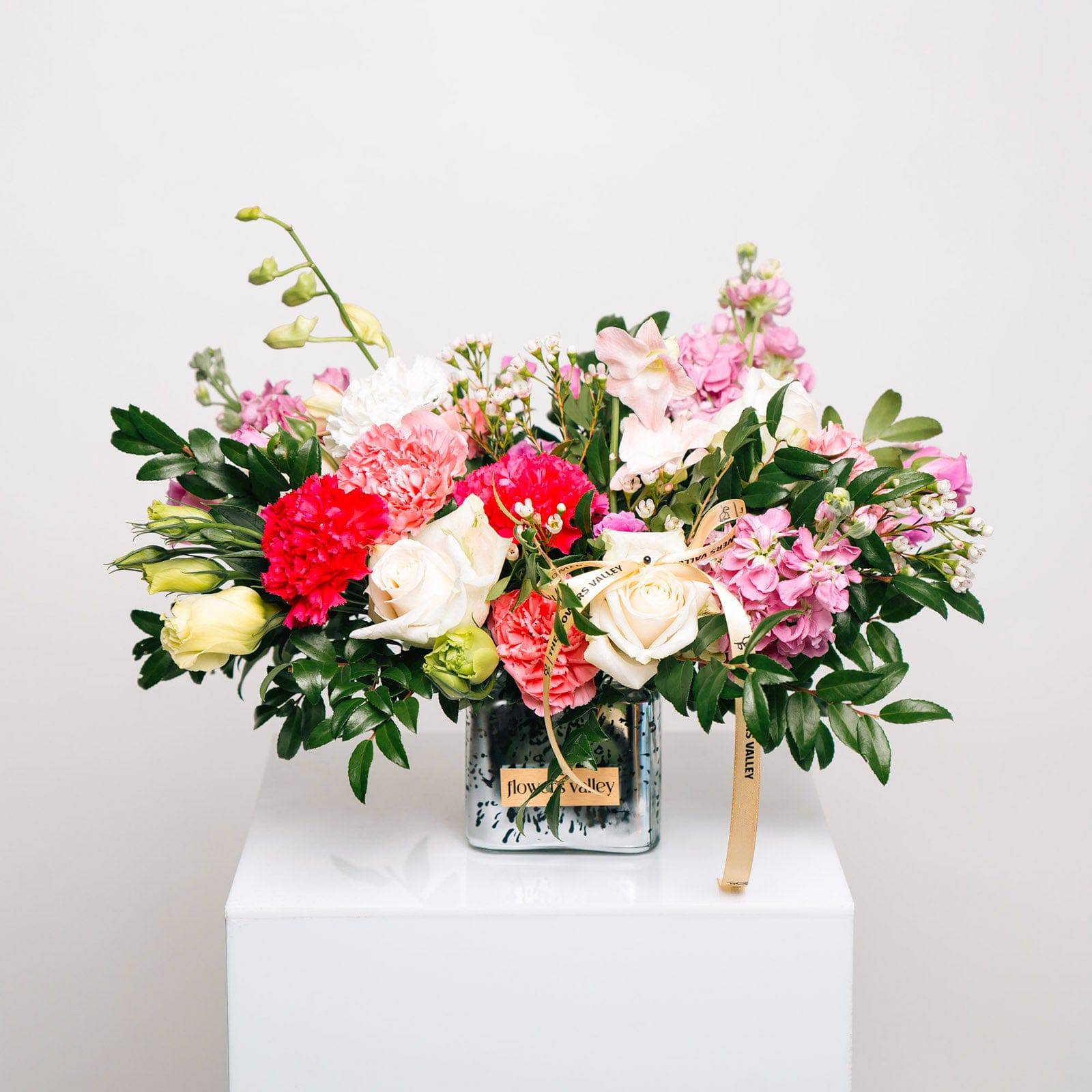
If you're not sure where to start, our signature arrangements are built around exactly this idea — fewer, larger blooms in a considered palette, designed to anchor a room rather than blend into it.


Building a Bold Color and Texture Palette
There are two reliable directions for a bold palette, and they pull from opposite instincts.
The first is contrast. A colorful flower bouquet that pairs deep purples with bright oranges, or hot pink with chartreuse, creates energy through tension — the colors compete a little, and that's the point. This works well in rooms with neutral walls and furniture, where the flowers can carry all the visual interest on their own.
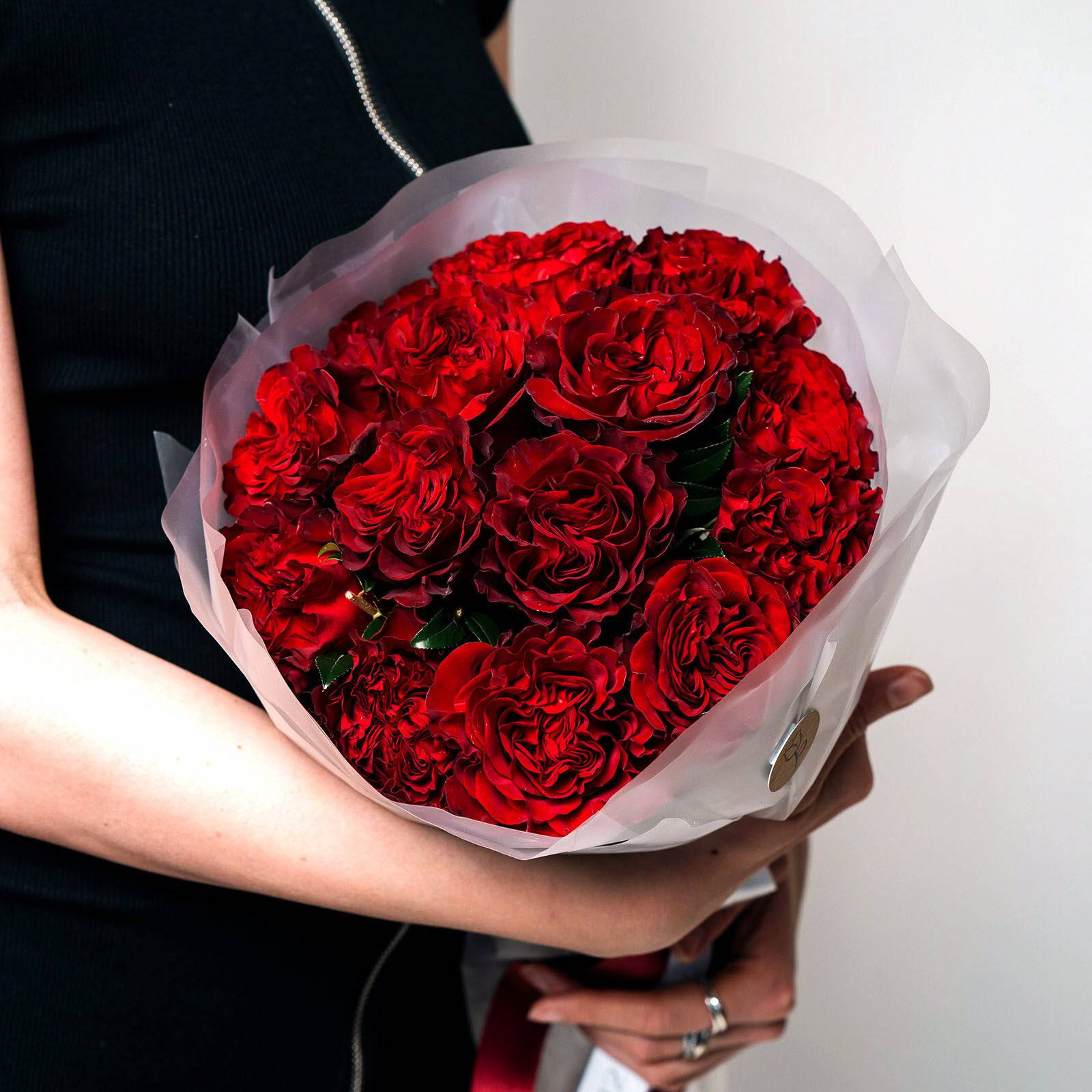
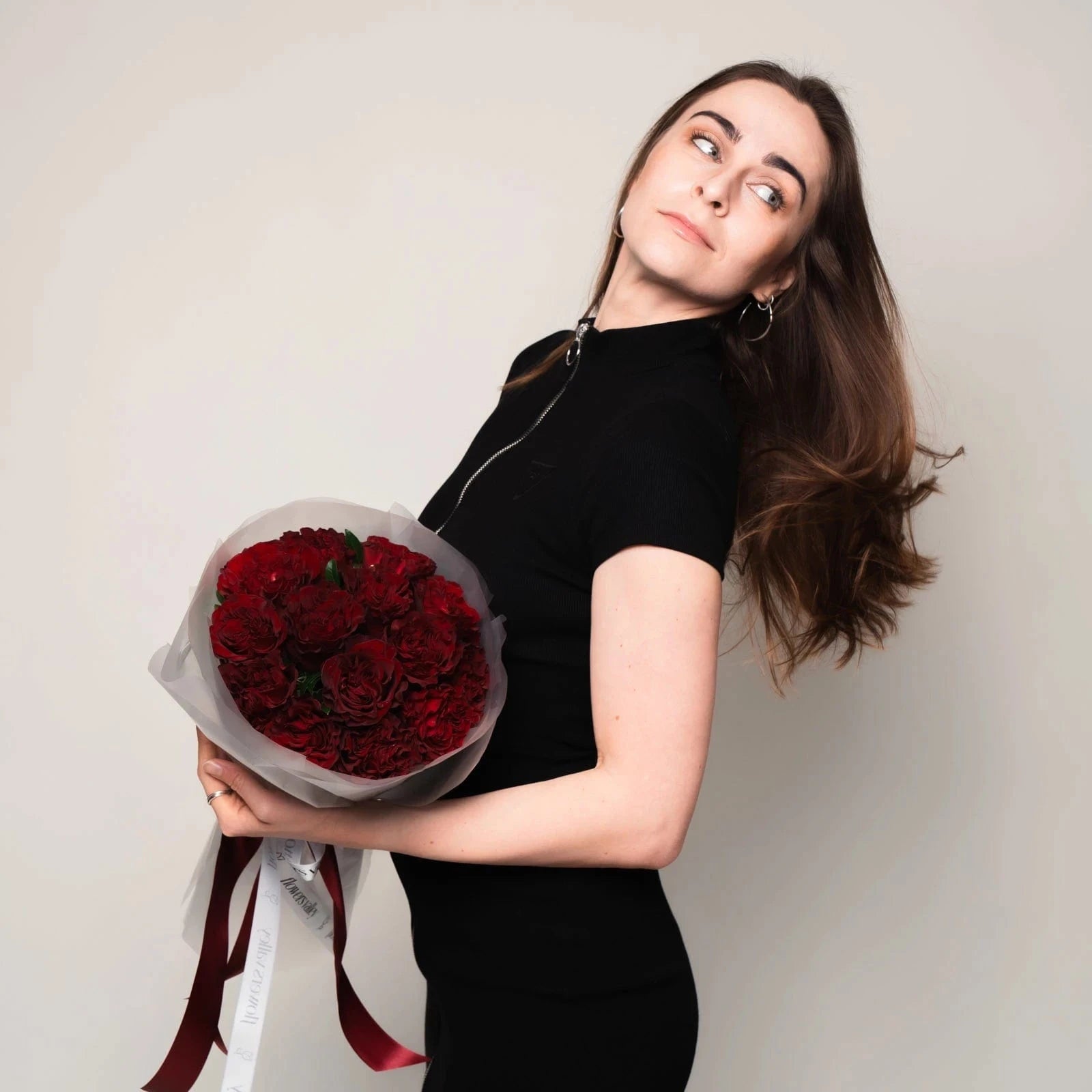
The second direction is monochromatic. A monochromatic bouquet built entirely from one color family — every shade of burgundy from deep wine to dusty rose, for example — reads as more considered and less busy, even though it's just as bold. The drama comes from depth rather than contrast.
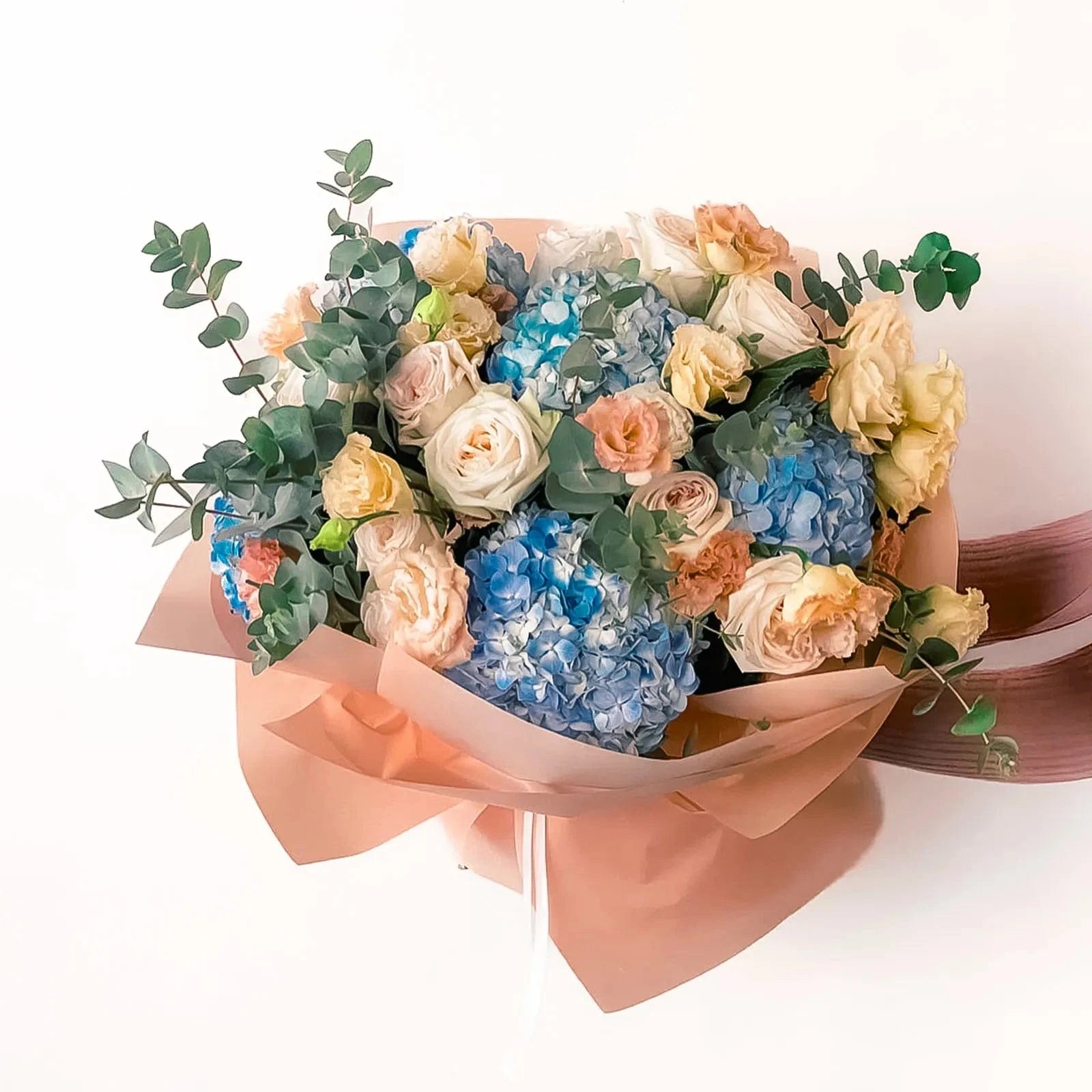
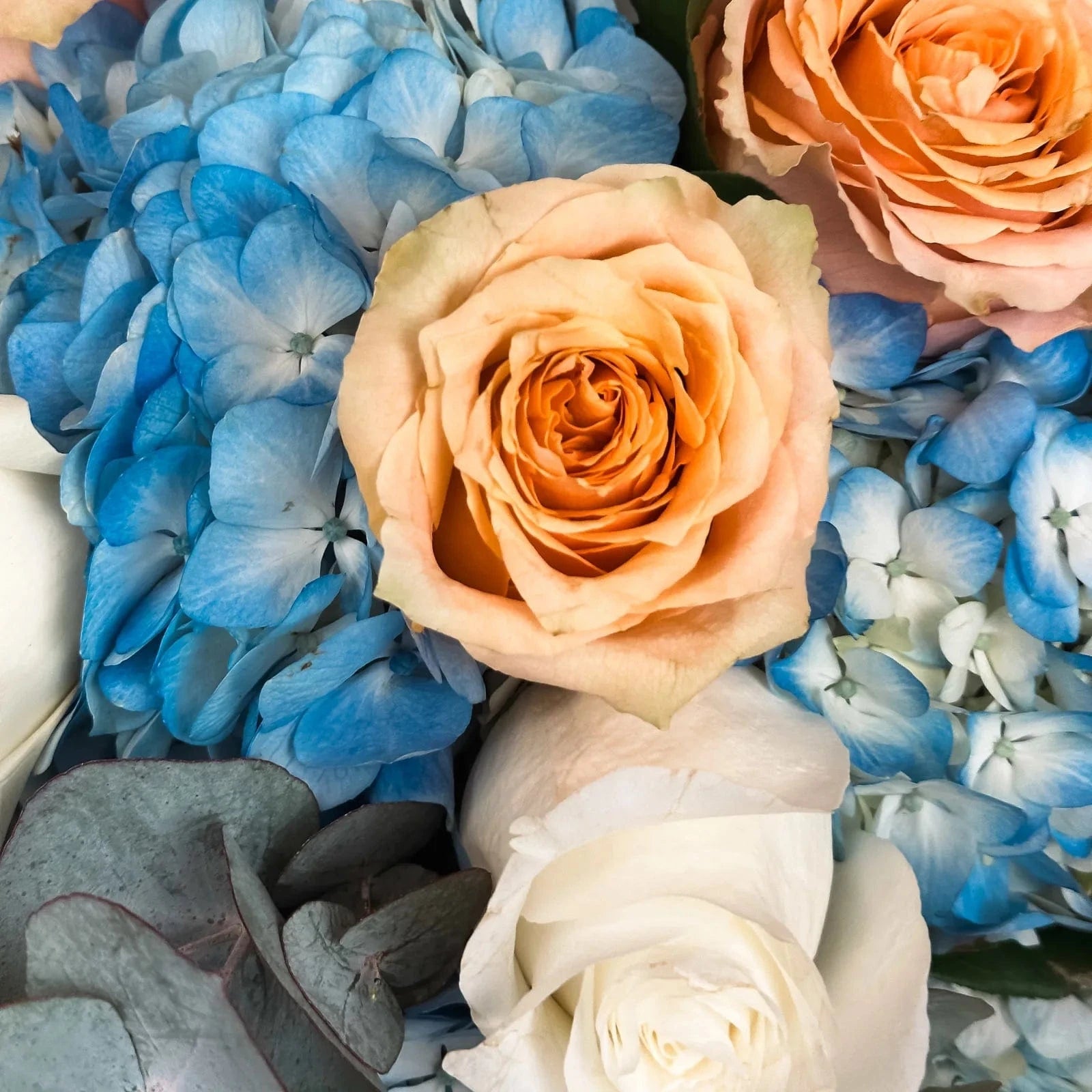
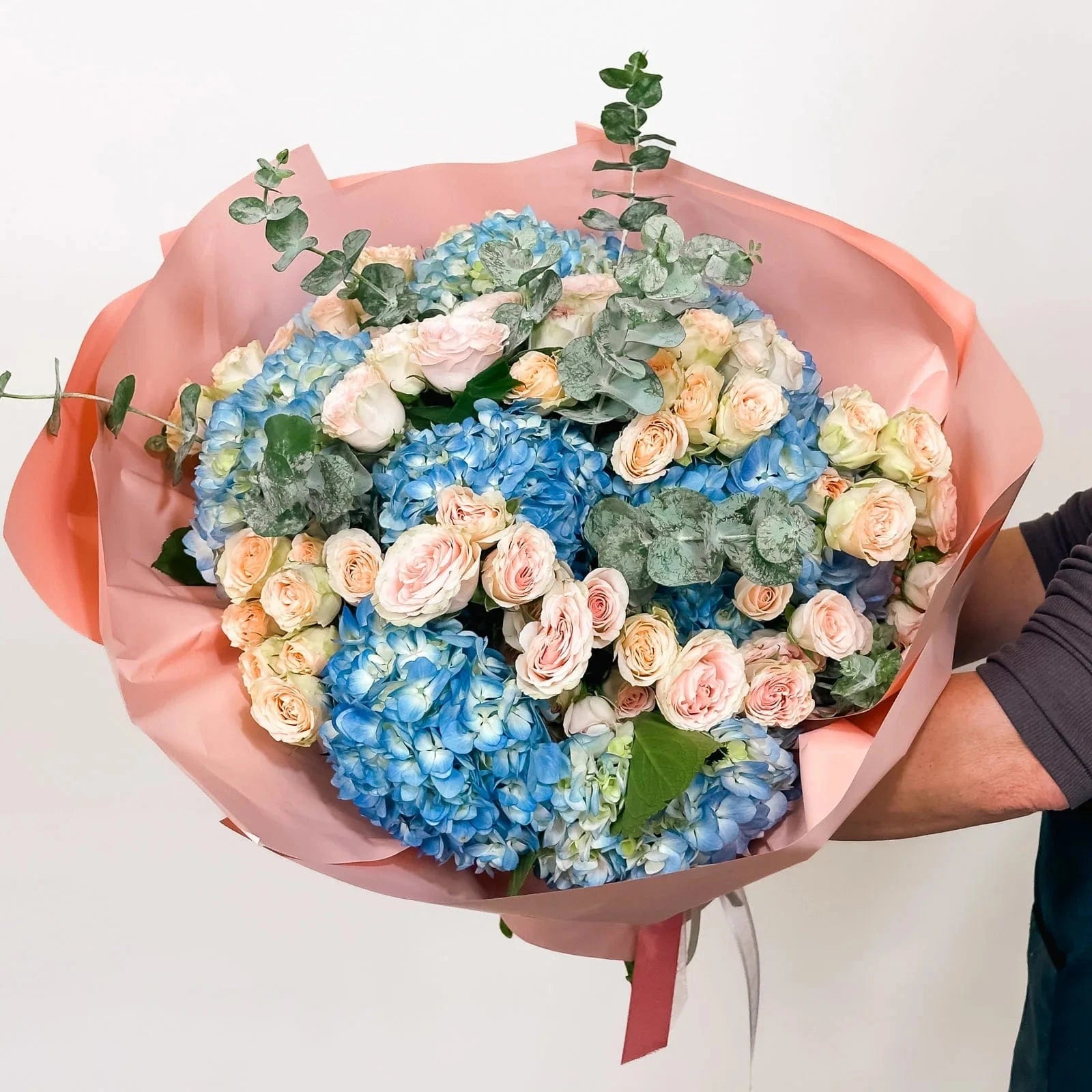
Dahlias are one of the easiest flowers to build either approach around. Their layered petals and wide range of colors, from near-black reds to sherbet oranges, make them a natural focal point whether you're going for contrast or a single-color story. Hydrangeas work well too, especially for the monochromatic route — their full, rounded blooms fill out an arrangement quickly and carry color variation well, from soft blue to deep violet.


Going Big: Oversized and Architectural Arrangements
Scale is the fastest way to turn an ordinary bouquet into a centerpiece. An oversized flower arrangement — one noticeably larger than what most people put on a dining table — changes how a room feels almost immediately, even if nothing else in the space has moved.
This is part of a broader shift in living room flower styling for 2026, where smaller, fussier arrangements are giving way to fewer, larger pieces with real presence. Oversized vases and containers that hold their own as furniture, not just as flower holders, have become part of this trend, and the arrangements inside them follow suit — taller stems, wider spreads, more space between blooms.
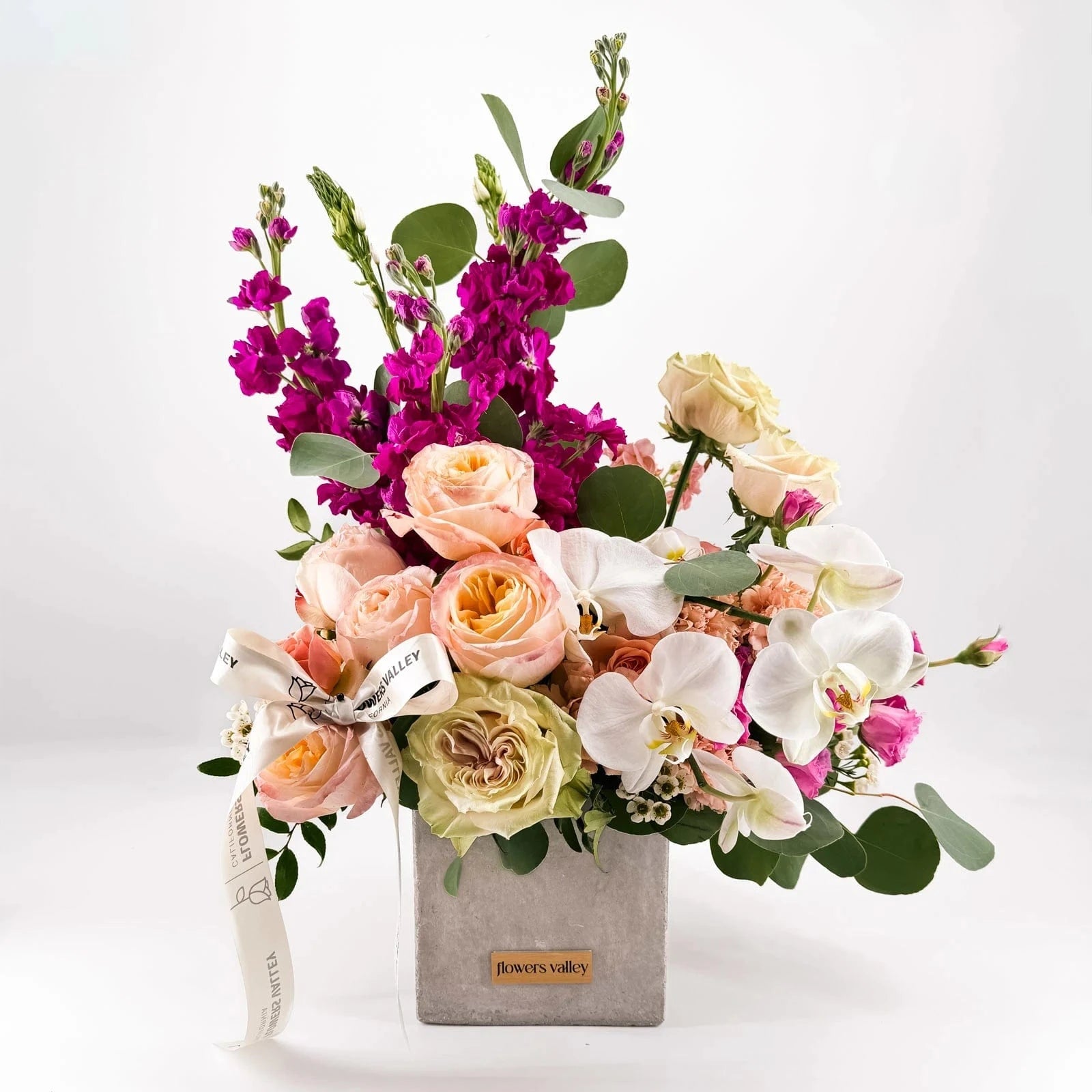
An architectural flower arrangement takes this further by treating the stems themselves as structure. Instead of a rounded, full shape, the design uses height, angles, and gaps deliberately — closer to a sculpture than a traditional bouquet. Branches, tall delphinium, or curving stems work well here, especially in a tall, narrow vase that emphasizes the vertical line.
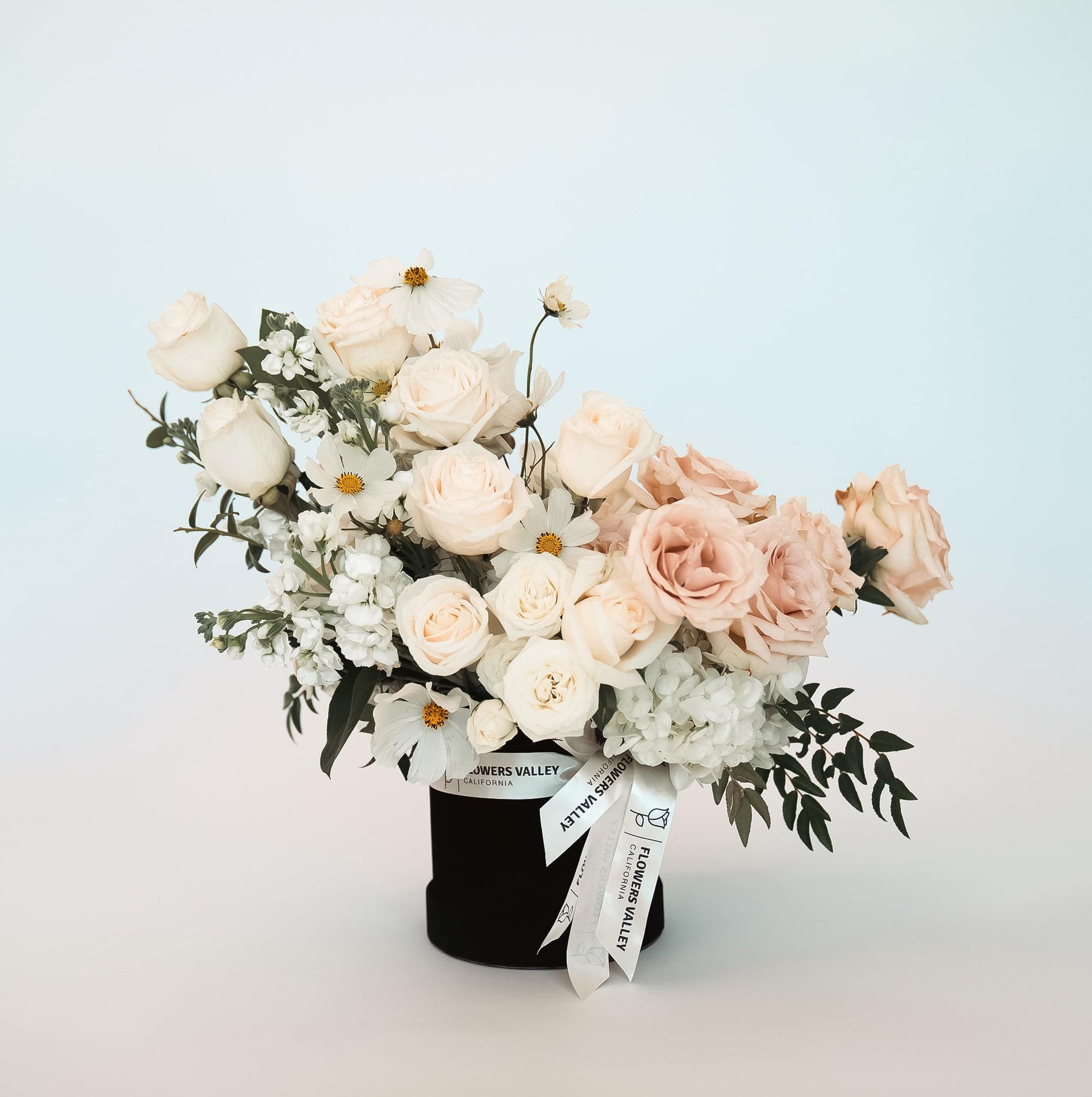
For either approach, our arrangements in vases are designed to arrive ready to place, with the scale and structure already considered — no extra styling required once they're on your table or console.
Flowers That Photograph Beautifully
Some flowers simply hold up better in photos than others, and it has less to do with how they look in person and more to do with how they catch light.
A photogenic bouquet usually has clear shapes and defined edges — flowers that read well even at a distance or in low light. Flat, open blooms with strong color saturation tend to photograph better than tightly packed, textured ones, because the camera can pick out their form instead of blending everything into a single mass.
Sunflower bouquets are a reliable choice here. Their large, flat faces and saturated yellow hold color in almost any lighting, and a single stem can anchor a whole frame. They work especially well near a window, where backlight brings out the texture of the petals without washing out the color.
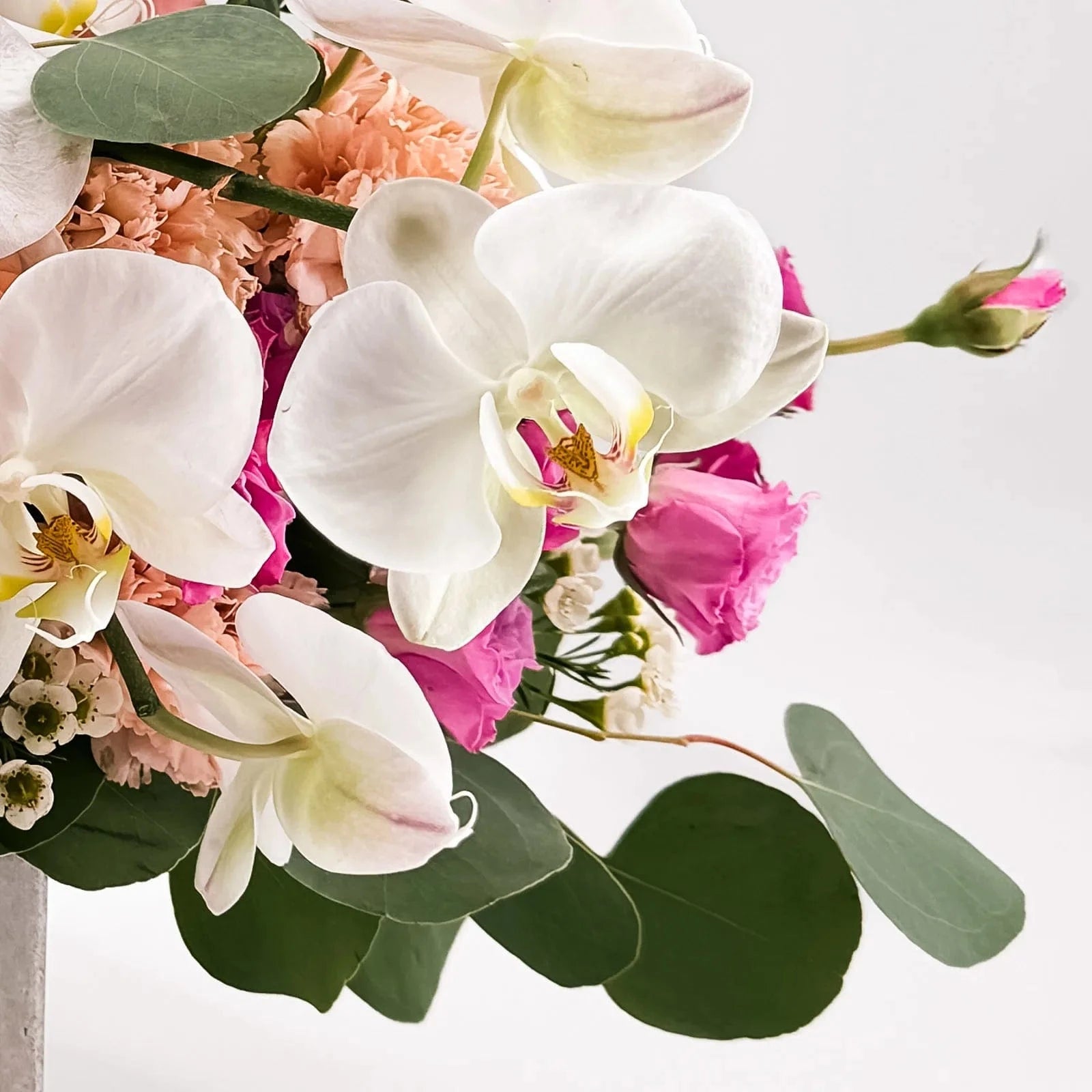
Orchid arrangements photograph well for a different reason — their structure. The long stems and widely spaced blooms give a photo room to breathe, which makes them a good fit for minimal, modern interiors where the goal is a few clean shapes rather than a dense burst of color.
If flowers that photograph well are part of what you're after, think about where the arrangement will sit relative to natural light before you think about the flowers themselves. The right spot does more work than people expect.


Bringing a Statement Bouquet Into Your Home
Once you know the direction — bold contrast or monochromatic, oversized or architectural, photo-ready or not — bringing flowers for home decor into your space comes down to a few practical choices.
Start with placement. A statement piece works best somewhere it has room to be seen fully: an entry table, the center of a dining table, or a console against a plain wall. Avoid crowding it next to other decorative objects, since part of what makes a bouquet read as a statement is the empty space around it.
If you're wondering how to make a bold flower arrangement at home from a delivered bouquet, the simplest adjustment is often the vase. A taller or wider container than what arrives with the flowers can change the whole proportion of the piece, especially for oversized stems that need room to spread.
Preserved flowers are worth considering too, particularly for a statement piece that stays in place for months. A preserved flower statement piece in a bold color holds its shape and color far longer than fresh stems, which makes it a practical option for a permanent spot in the living room or entryway.
For something fresh and ready today, same-day flower delivery makes it easy to bring a statement bouquet home without planning ahead. If you're in the San Francisco Bay Area, we deliver throughout the region, so a bold arrangement can be on your table by this afternoon.
Frequently Asked Questions
What flowers work best for a statement bouquet?
The best flowers for a statement bouquet are ones with strong color, large blooms, or distinct shapes — dahlias, hydrangeas, sunflowers, and orchids all work well. What matters most isn't the specific flower but restraint: choosing fewer varieties and letting each one take up real space, rather than mixing many small stems together.
How long do bold flower arrangements last?
Most bold arrangements last seven to ten days with fresh water changed every two to three days. Sturdier blooms like dahlias and sunflowers tend to hold their shape and color the longest.
What size vase should I use for an oversized arrangement?
Choose a vase at least 10 to 12 inches tall with a wide opening. The container should feel proportional to the blooms — a vase that's too small will make even large flowers look cramped.
How do I style flowers so they photograph well?
Place the arrangement near natural light, ideally a window with indirect sun rather than direct, harsh light. Photograph it from slightly above or at eye level rather than from below, and keep the background simple. Flowers with clear shapes, like sunflowers or orchids, tend to photograph better than densely packed bouquets, since the camera can pick out individual blooms.




0 comments