

Most people pick flowers by instinct — reaching for red when they mean love, yellow when they want to cheer someone up. That instinct is older than most realize. For centuries, the color of a bloom carried a specific message, and people chose accordingly. This guide breaks down what each color actually means, where those meanings came from, and how to use them when it counts.
The History Behind Flower Color Symbolism
The practice has a name: floriography, or the language of flowers. It existed long before the Victorians, but that era is when it got codified. In 19th-century England, open emotional expression was often considered inappropriate, so flowers did the talking. A single stem could communicate what a letter couldn't. Floriography dictionaries — books that matched flowers to meanings — were printed and circulated widely. At least 98 different guides were in circulation in the United States between 1827 and 1923.
Those specific dictionaries are long out of print, but the associations stuck. Red roses at Valentine's Day, white lilies at a funeral, sunflowers sent to a friend who needs a lift — none of that is accidental. It's just old information that never went away.


Red and Pink: The Colors of Love and Admiration
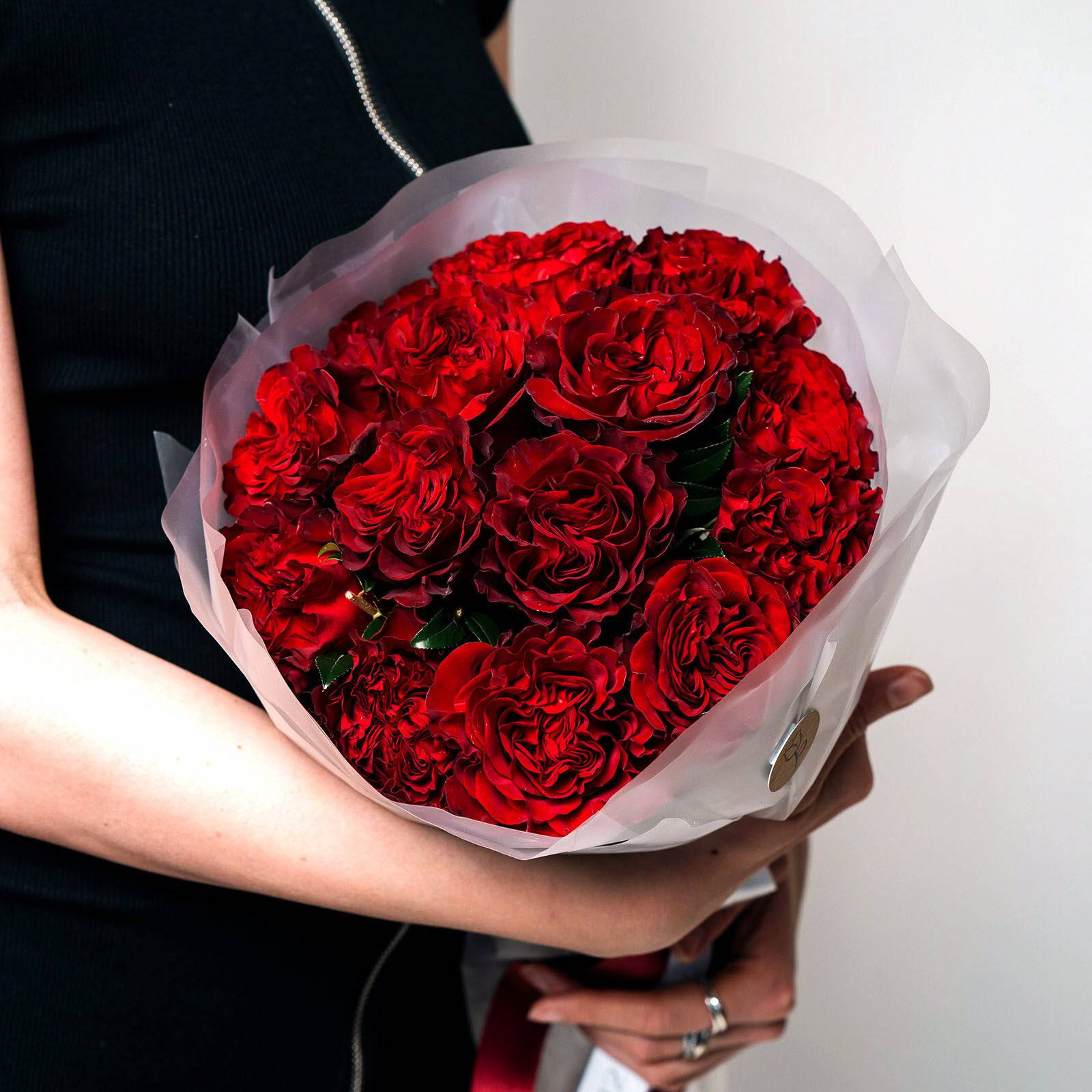
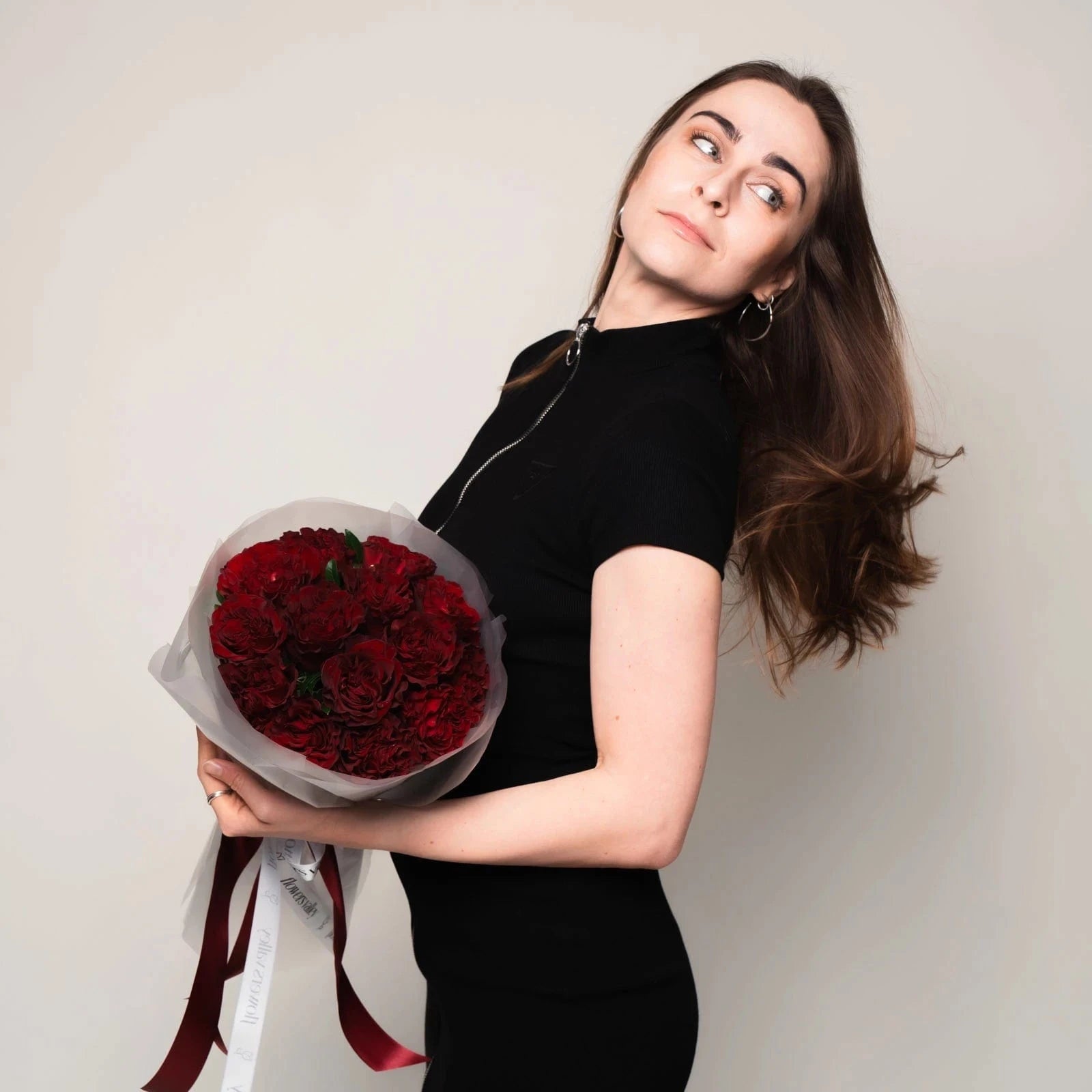
Red is the clearest signal in the floral world. It means love, desire, and deep affection. It also — and this gets overlooked — means respect and courage. A red bloom isn't only for romance; it works for honoring someone's strength or marking a real achievement.
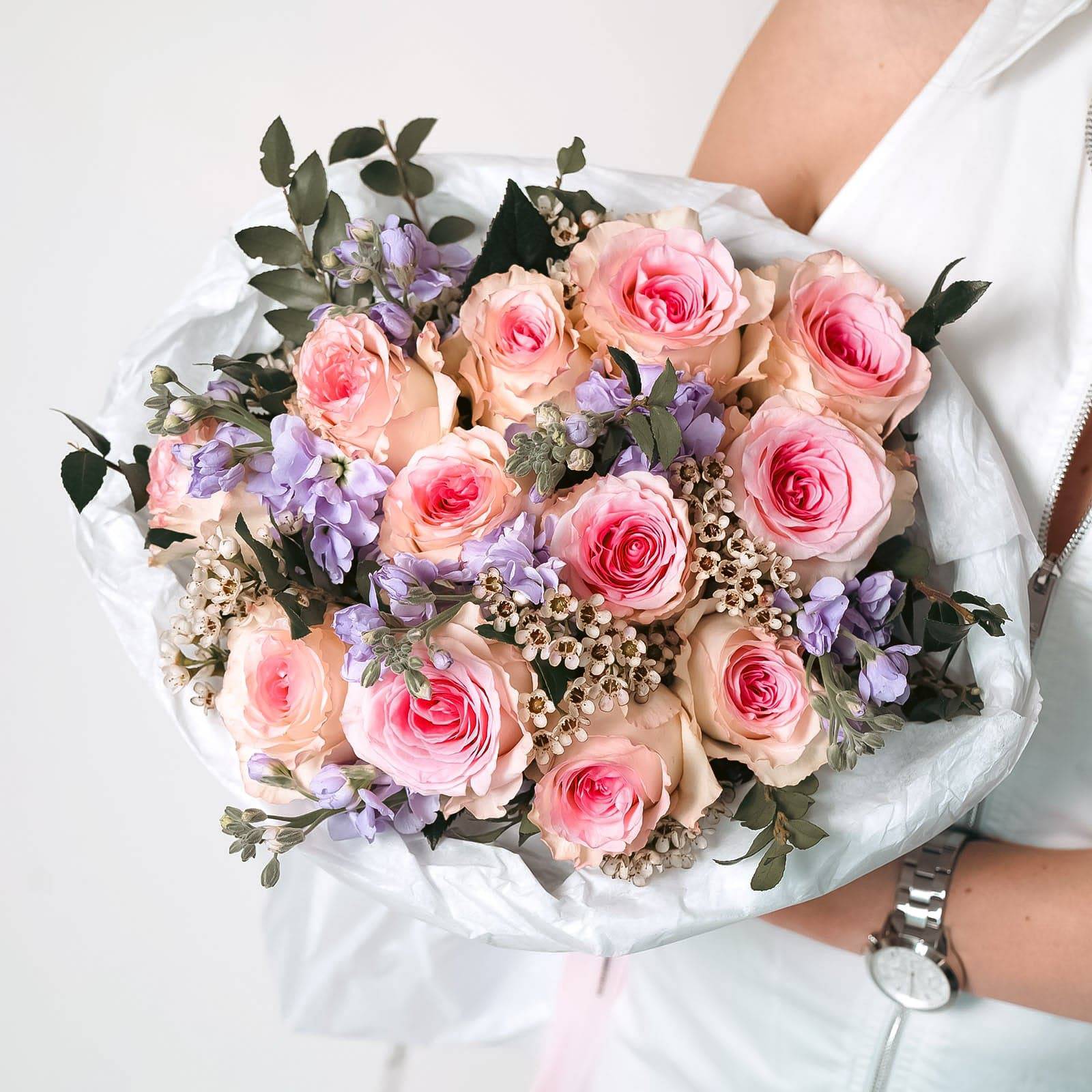
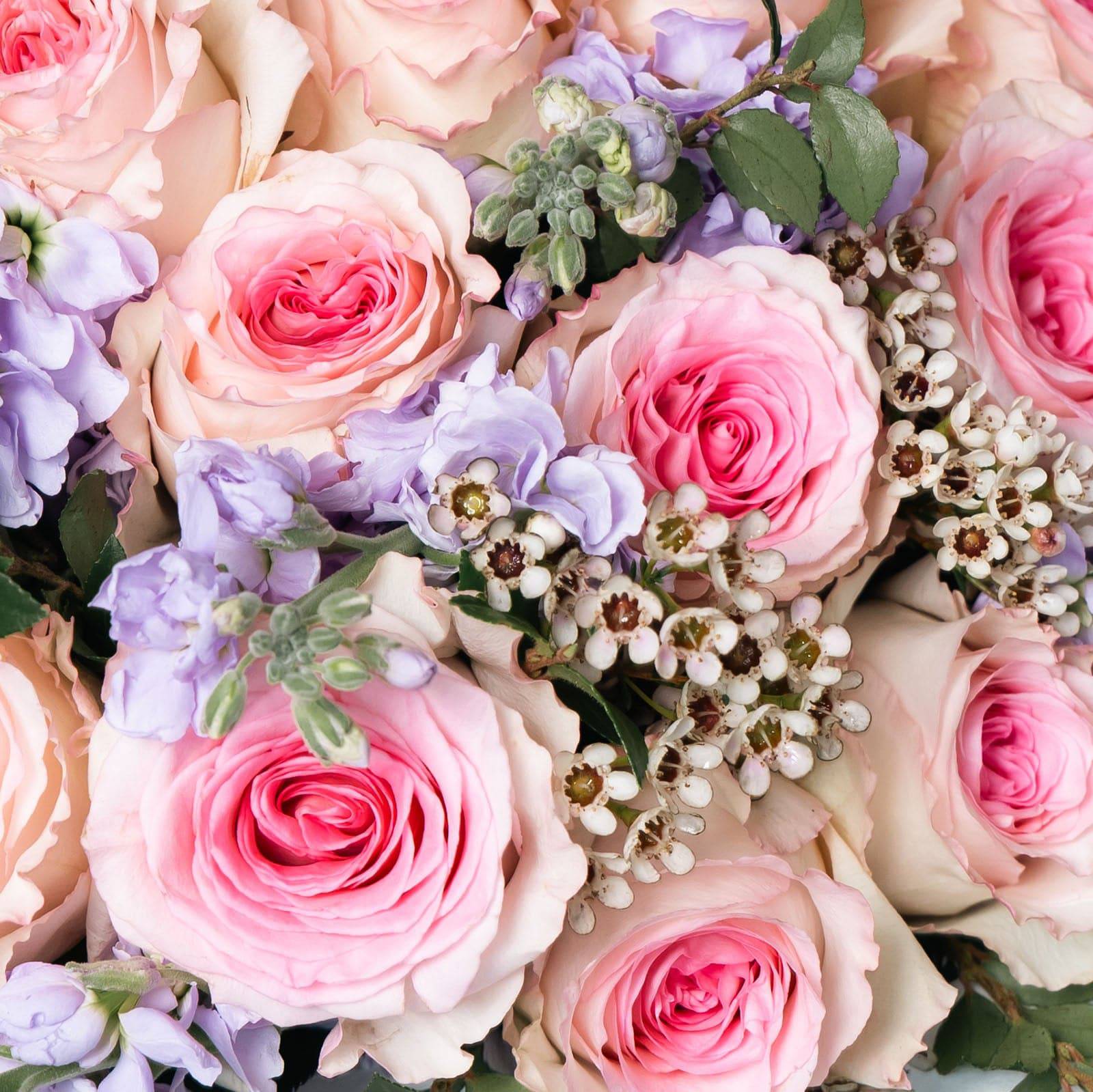
Pink is the same emotional territory, turned down a few degrees. Light pink reads as tenderness and grace. Deeper pinks lean toward gratitude and acknowledgment. It's the right color when the feeling is warm but you don't want the weight of a grand gesture — a thank-you to a colleague, something for a mother, a friend who showed up when it mattered.
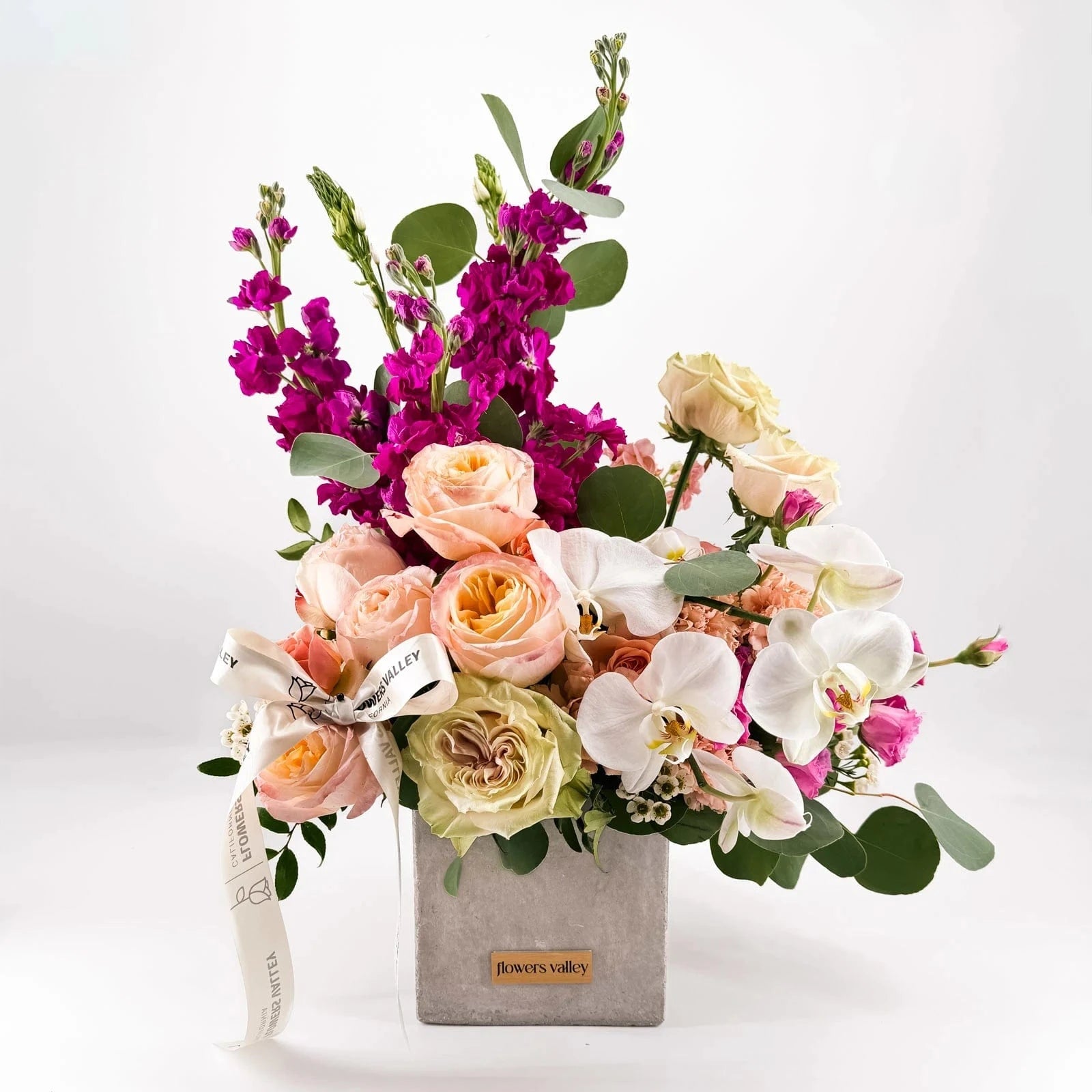
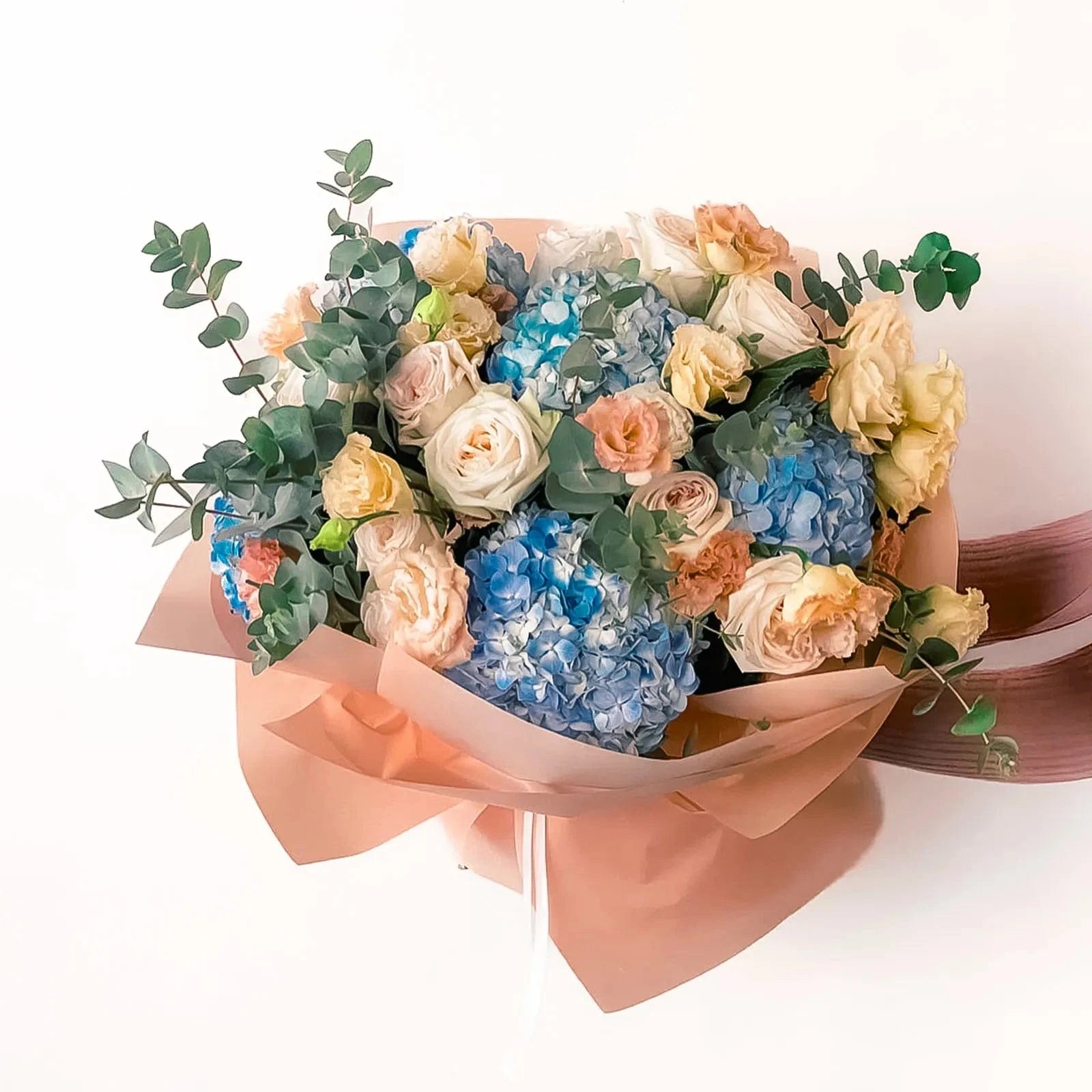
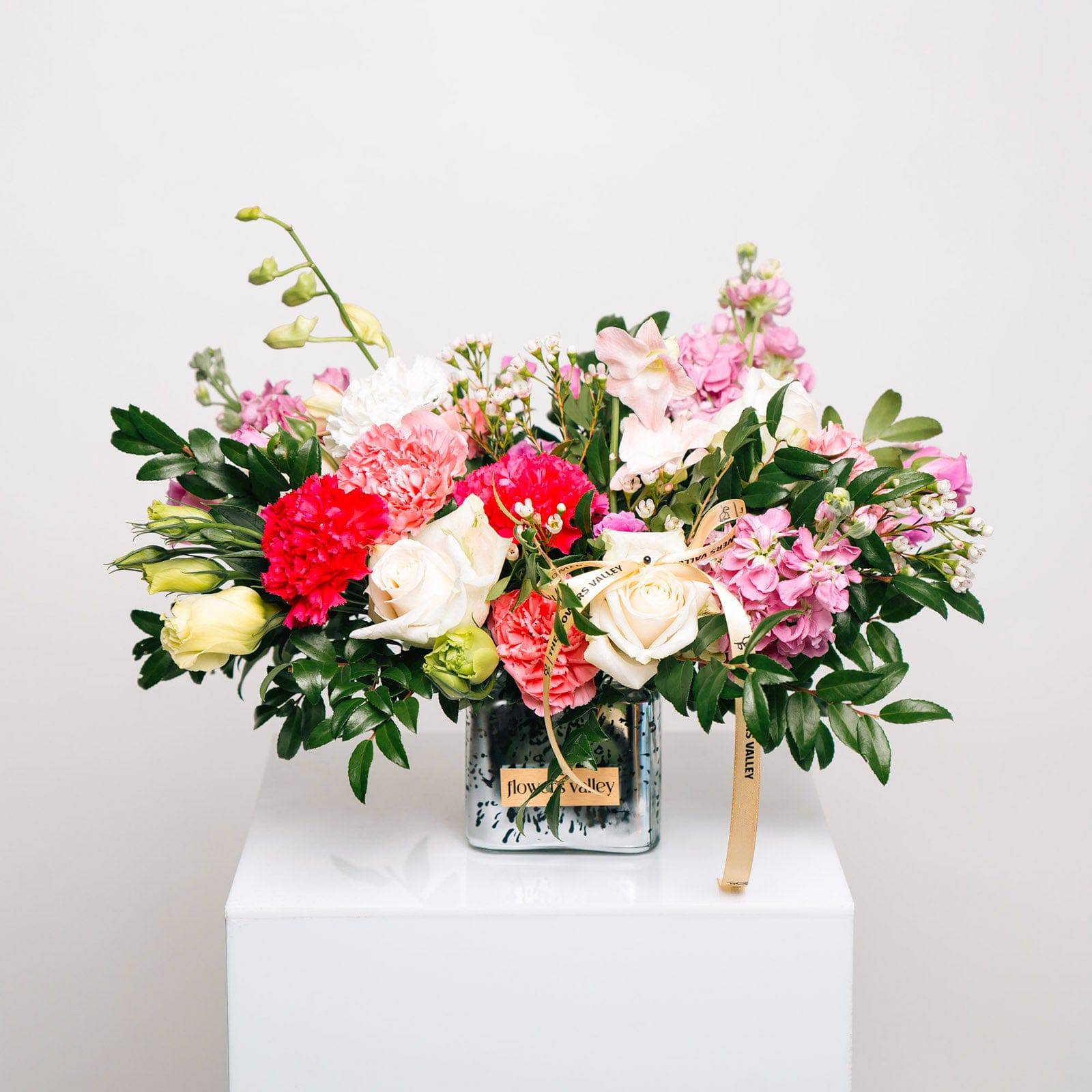
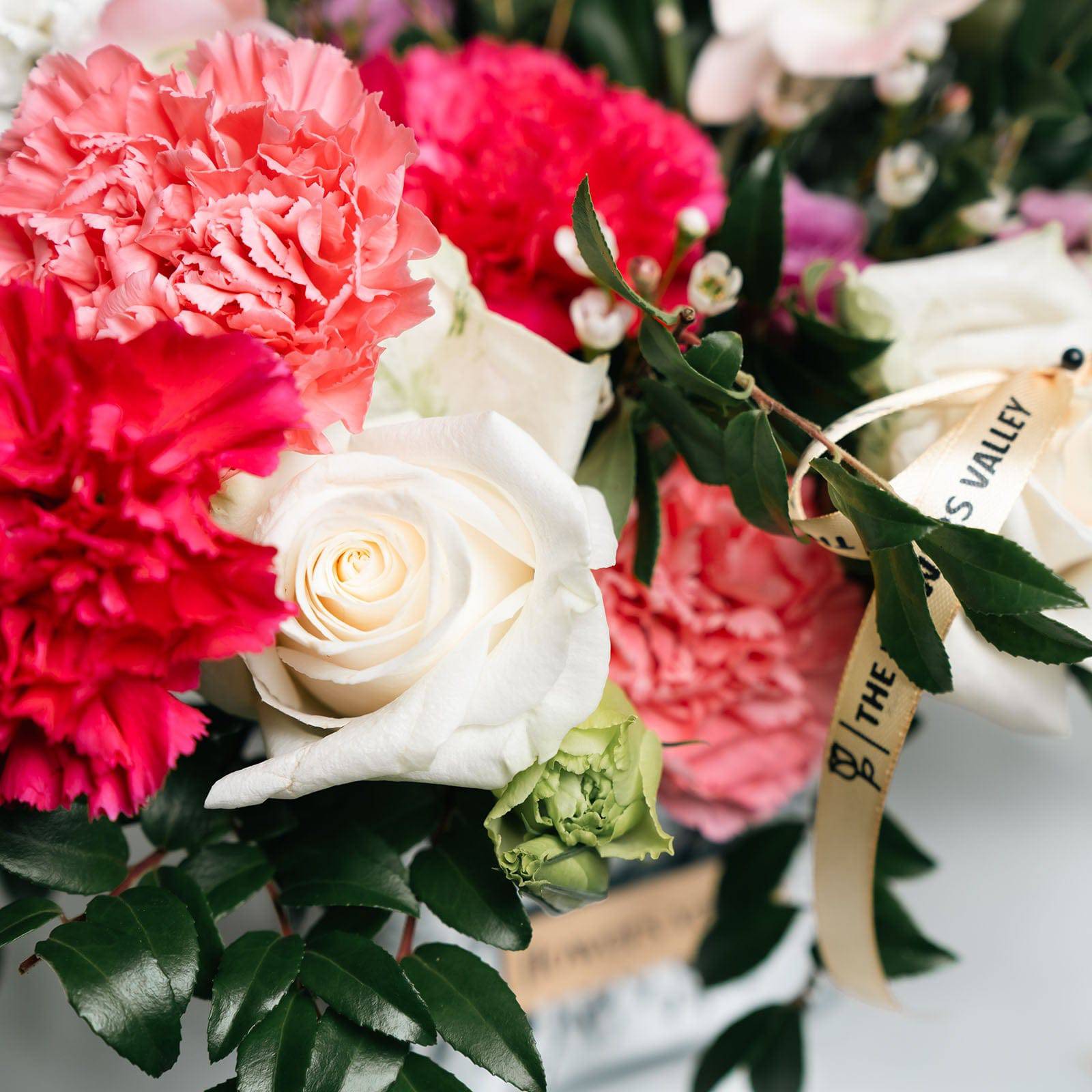
For anniversary and romantic occasions, our rose bouquets are the natural starting point. When you want pink alongside other tones, our mix bouquets give you more room to say something layered.
Yellow, Orange, and Sunflower Gold: Joy, Friendship, and Energy
Yellow is for friendship, plain and simple. It's not a dramatic color — it doesn't carry grief or longing or history. There's nothing complicated about it — just genuine warmth. Send yellow when the message is: I'm thinking of you, I hope things are going well, I'm glad to know you.
Orange goes a step further. It's bolder, more energetic — better suited to celebration, congratulations, a promotion, a graduation. It reads as enthusiastic rather than sentimental.
Sunflower bouquets are the obvious standard-bearer here: tall, radiant, hard to misread. For something a little quieter in the same warm palette, tulip arrangements in yellow or orange land differently — more refined, same warmth.

Purple and Lavender: Elegance, Royalty, and Admiration
Purple's association with royalty isn't arbitrary — for most of history, purple dye was extraordinarily expensive and reserved for people of rank. That connection between purple and something elevated, something worth honoring, transferred to flowers. Today, purple blooms are a good choice when you want to express admiration or mark a significant moment: a major birthday, a professional milestone, a thank-you that needs to feel substantial.
Lavender is softer. It's associated with grace, calm, and femininity — a gentler version of the same family.
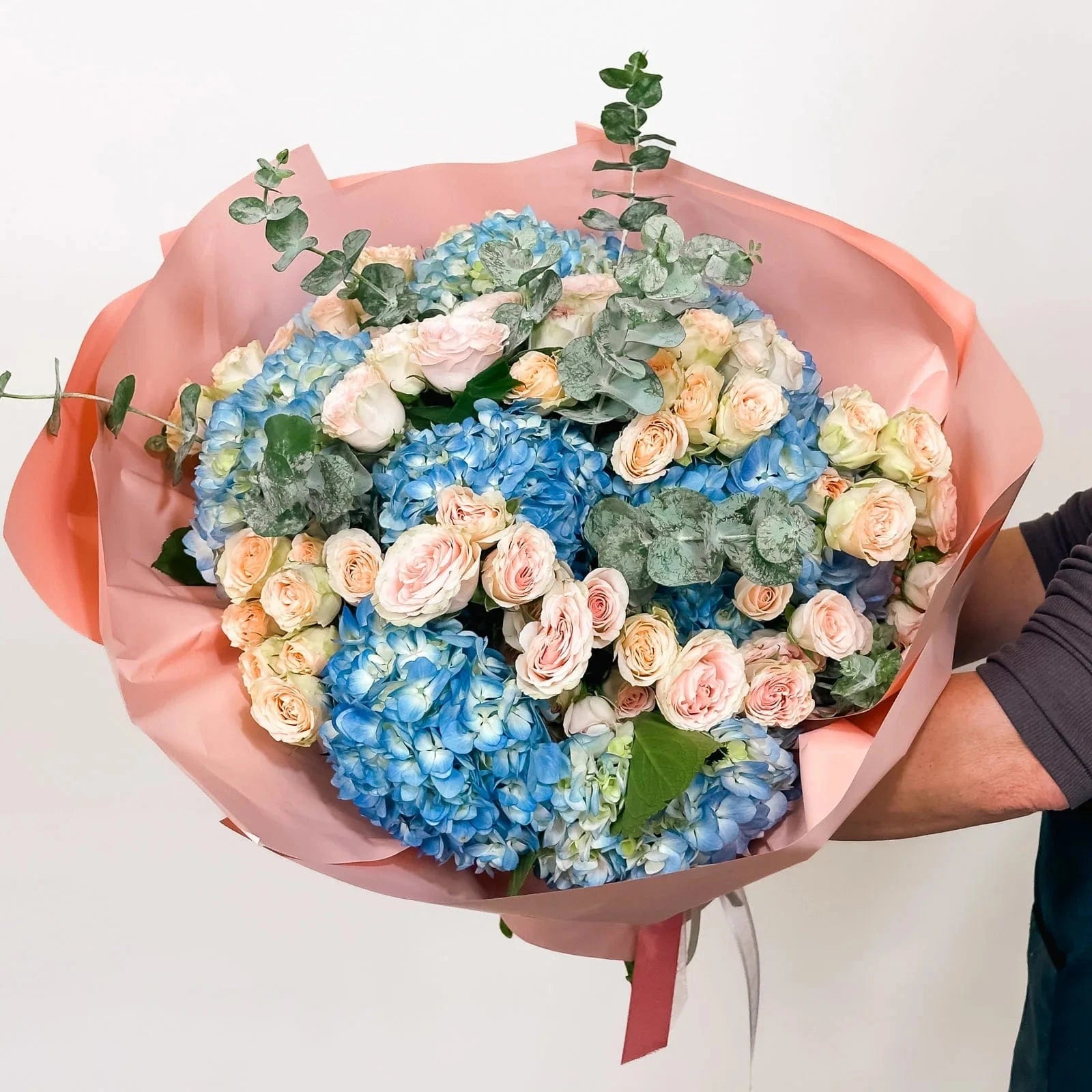
Purple is also having a clear moment in floristry right now. Jewel-toned arrangements dominated 2025 and have carried into 2026, driven in part by a broader taste for what the design world is calling calm luxury — things that feel considered rather than loud. Our flower bouquets are made with that in mind. For texture and volume in a purple arrangement, hydrangea arrangements add something the tighter blooms can't.
White and Soft Hues: Purity, Sympathy, and New Beginnings
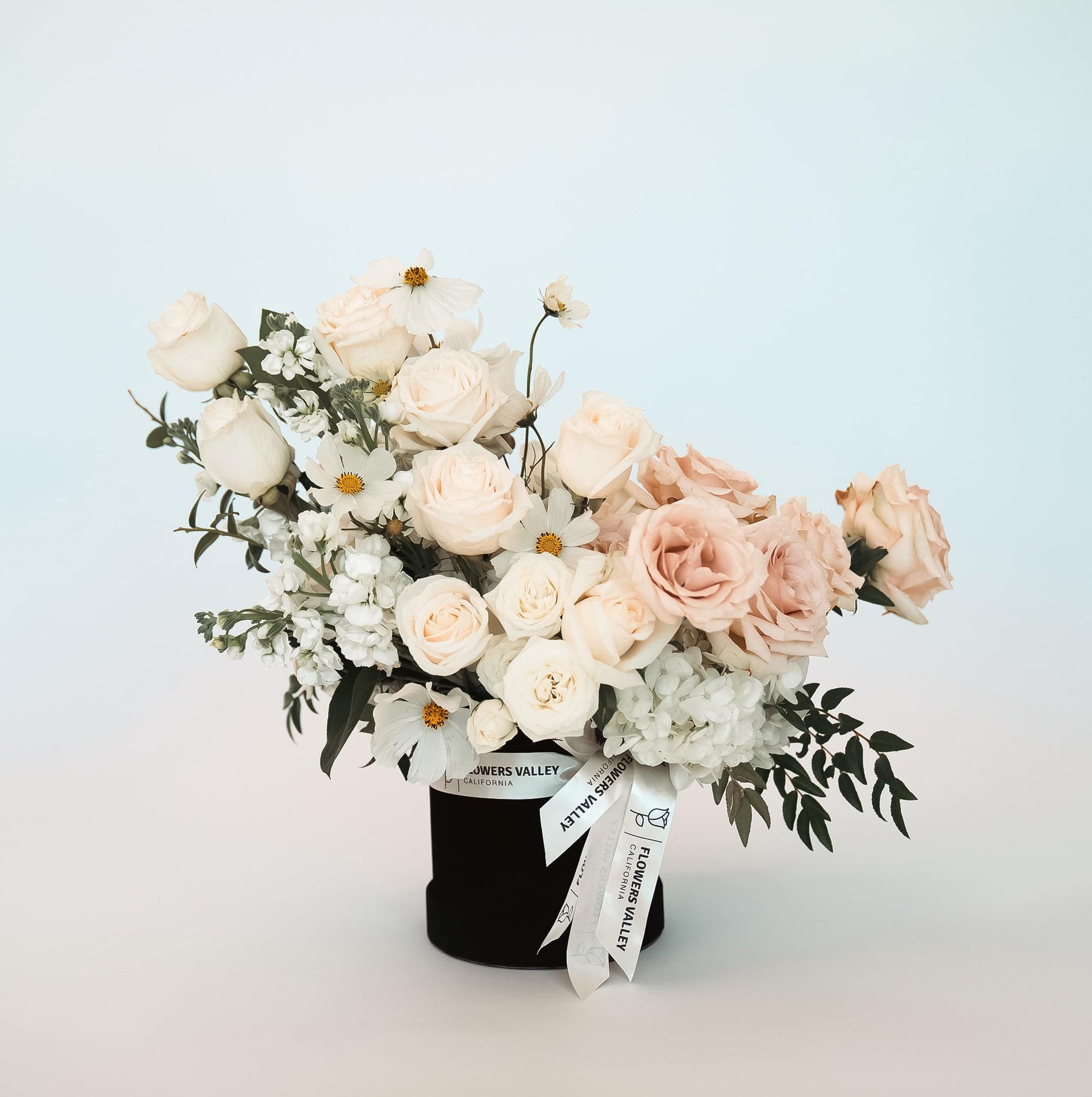
White shows up at more occasions than any other color — and the occasions it shows up at could hardly be more different. Weddings. Funerals. The birth of a child. The start of something new. What they have in common is weight — the sense that the moment deserves to be marked. White carries that without tipping into a specific emotion.
It also does something useful in mixed arrangements: it makes other colors read more clearly. Red beside white looks more intense. Purple against white feels more formal. Ivory and cream work similarly but add warmth.
When the occasion is a loss, an illness, or a gesture meant to express care without agenda, our sympathy flowers are put together for exactly that register.


Choosing the Right Flower Color for Every Occasion
Color meaning is a starting point, not a rule. Most people end up with two or three colors together — which is fine, and often better. A single-color bouquet makes a strong statement; a mixed one can hold a more complex feeling.
A simple way to think through it:
- Romantic love or anniversary — red, or red with white → anniversary flowers
- Friendship or encouragement — yellow, orange, or a warm mix
- Gratitude or admiration — pink, or pink with lavender
- Milestone or achievement — purple, or deep jewel tones
- Sympathy or remembrance — white, cream, or soft pastels
- No specific occasion — pick colors that suit the person, not the event
If you need something today, our same-day flower delivery is available for orders placed before the cutoff — the arrangement gets there fresh, same day.
Frequently Asked Questions
What do the different flower colors mean?
Red is love and passion. Pink is admiration and tenderness. Yellow is friendship and joy. Orange is enthusiasm, best for celebration. Purple signals elegance and deep respect. Lavender is grace and calm. White is purity and reverence — used for both weddings and funerals, which tells you something about how universal it is.
What color flowers are best for sympathy?
White. It conveys peace and respect across most cultures. Soft cream and pale lavender also work. Avoid warm, bright colors — yellow, orange, hot pink — which read as celebratory.
What does a purple flower bouquet mean?
Admiration and respect. It's the right choice when you want to honor someone — a major achievement, a significant birthday, a relationship you hold in high regard. It also reads as genuinely elegant rather than generic.
What color flowers should I send for a birthday?
Yellow or orange for a close friend — warm and unceremonious. Pink for family or a colleague where the feeling is affectionate but not romantic. Purple when you want the person to feel genuinely celebrated. When in doubt, a mix of two colors that suit them usually lands better than one you're not sure about.




0 comments