

Most people put flowers in a vase, step back, and feel like something is slightly off. The stems are too crowded, or one bloom is drooping, or the whole thing lists to the left. Learning how to arrange flowers at home mostly comes down to slowing down at the beginning — the preparation stage that most people skip. These beginner flower arrangement tips cover exactly that, from which flowers to choose to how to keep them looking good for as long as possible.
Start with the Right Flowers for Your Space
Think about where the arrangement will sit before you buy anything. A low coffee table calls for something wide and open. A narrow console needs height. That placement decision will tell you more about what to buy than any color preference will.
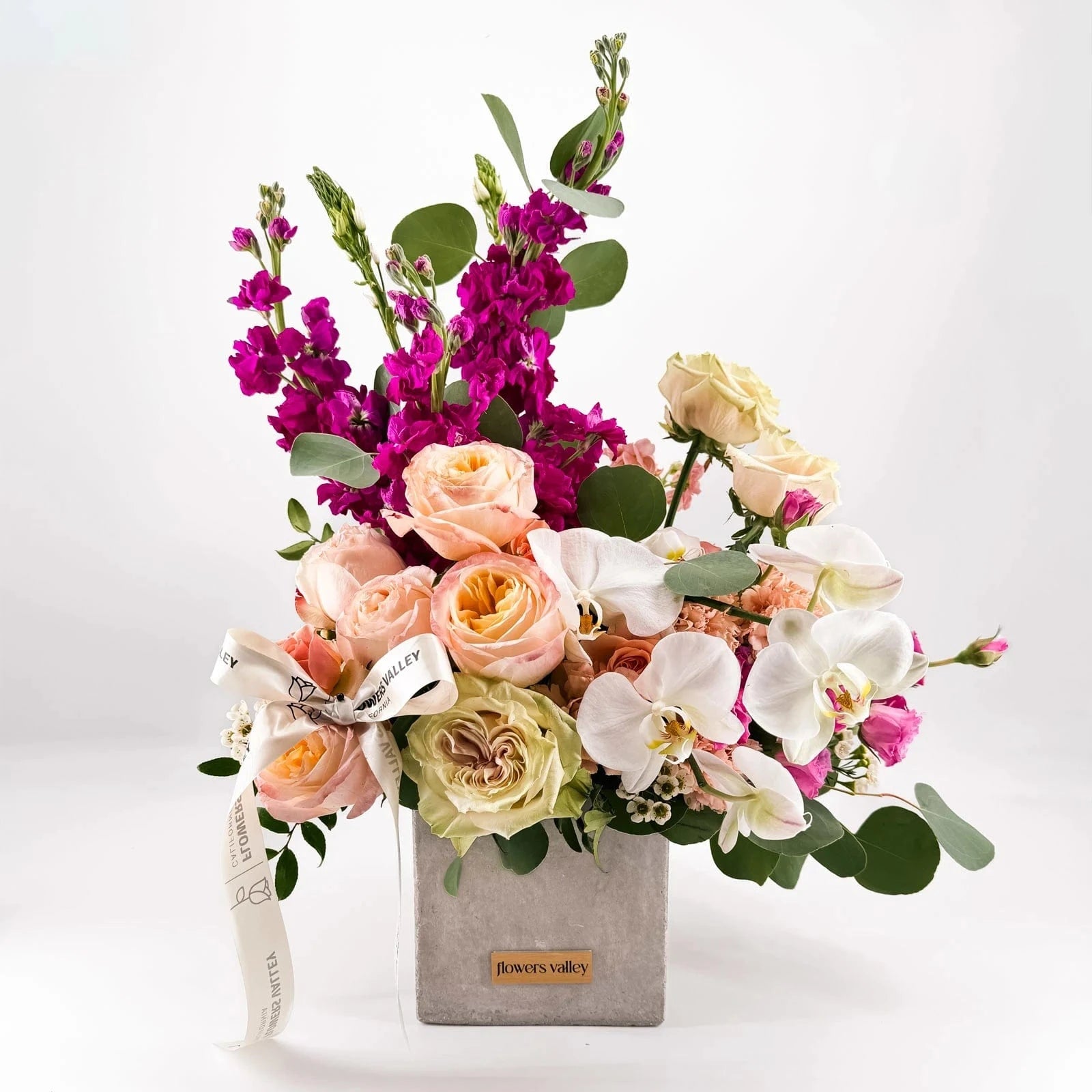
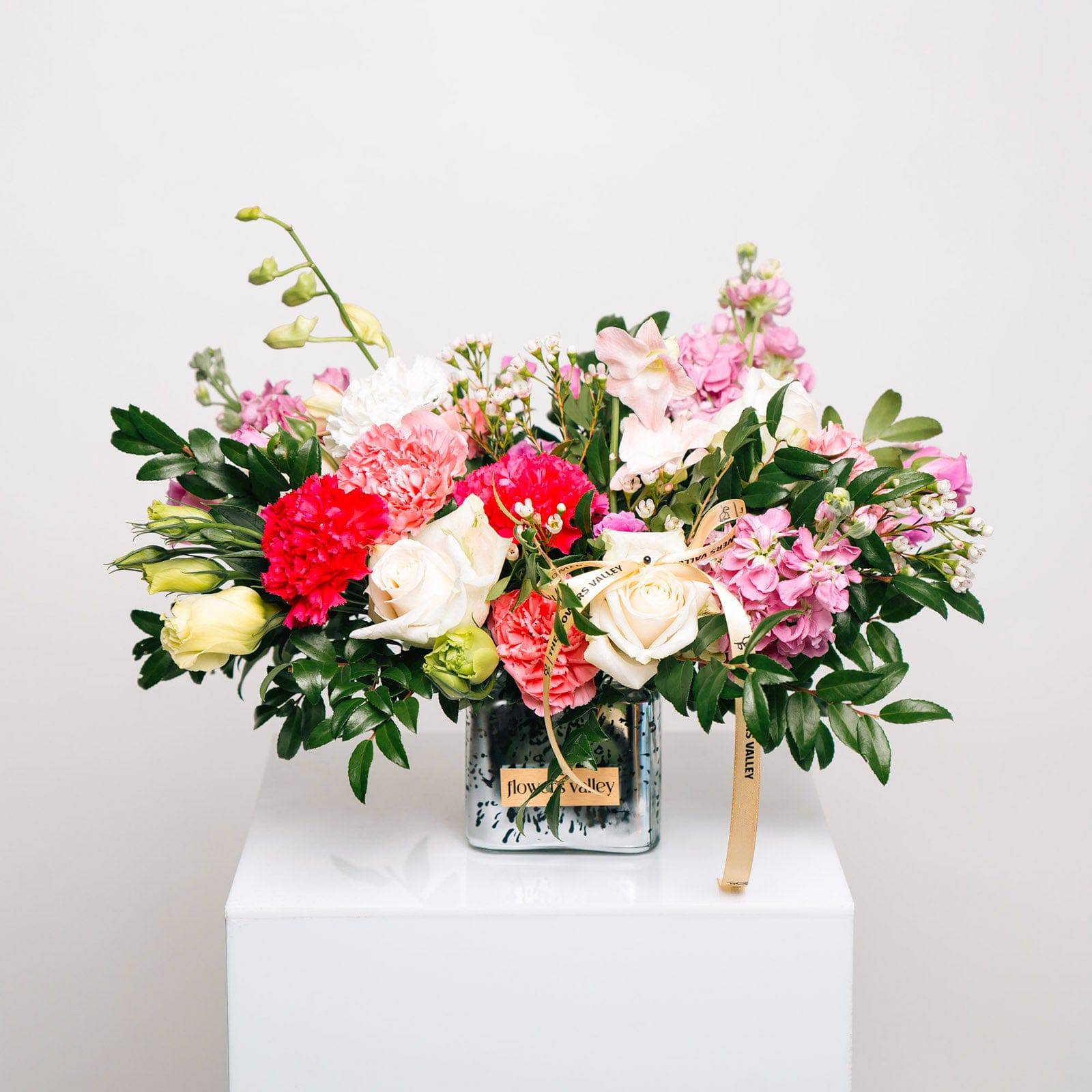
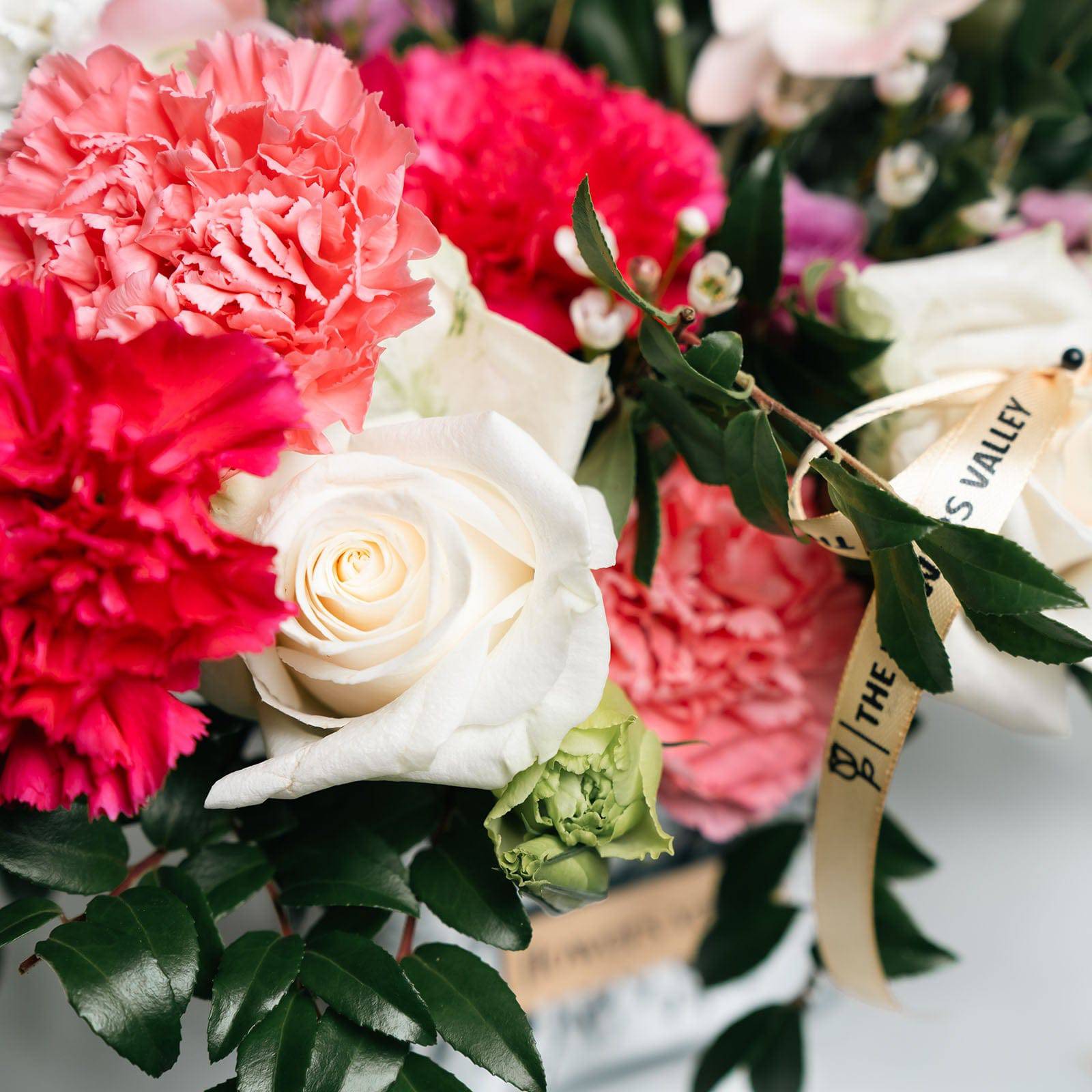
For a first DIY floral arrangement, it helps to work with three types of stems: one focal flower that carries the visual weight, one supporting flower to sit alongside it, and greenery to bridge the two and give the eye somewhere to rest. Roses or dahlias work well as focal flowers. Lisianthus or spray roses fill the middle ground. Eucalyptus or ruscus handle the rest.
If color pairing feels uncertain, start with our mix bouquets — the combinations are already worked out, which makes it easier to study what proportion looks like in practice. Tulips are worth trying on their own too. A single variety in one vase is genuinely one of the better ways to learn how stems behave.

How to Prepare and Cut Your Stems Properly
This is the part that makes the most difference and gets the least attention.
Before anything goes into a vase, get a deep container of cool water ready. Pull off any leaves that would end up underwater — foliage below the waterline breaks down quickly, and the bacteria it releases travels through the whole arrangement. Cutting on an angle rather than straight across gives the stem a wider drinking surface and keeps it from resting flush against the vase bottom where it can't take in water.
Use sharp scissors or floral shears — not kitchen scissors that have been through a drawer for three years. The quality of the cut matters more than it seems. Stems with soft tissue, like peonies, are worth trimming while held under water so no air pocket forms at the base. Ranunculus benefit from an hour in water before you touch them — they need time to drink and loosen before arranging works in your favor.
Choosing the Right Vase and Building Your Arrangement
The vase shapes everything. A cylinder vase with a straight side is the most forgiving option for beginners — it doesn't require much technique to keep stems where you put them, and it works with almost any flower. A useful starting point: the stems above the rim should stand roughly as tall as the vessel itself, give or take.
If the vase opening is wide, tape a grid across the top before you start. A few strips of clear tape in a crosshatch pattern hold stems in place without showing. It sounds fussy but it takes thirty seconds and it genuinely stops the arrangement from collapsing as you work.
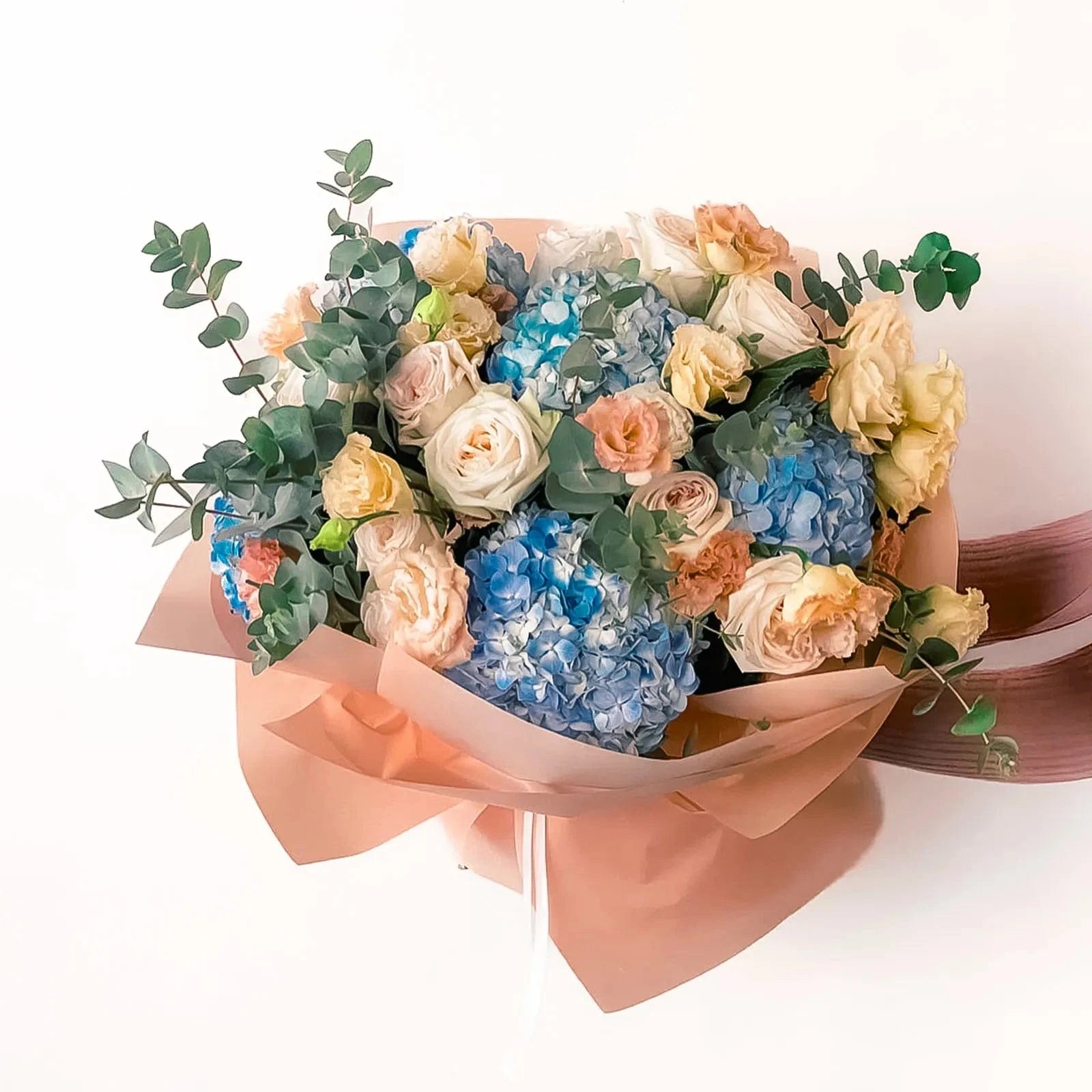
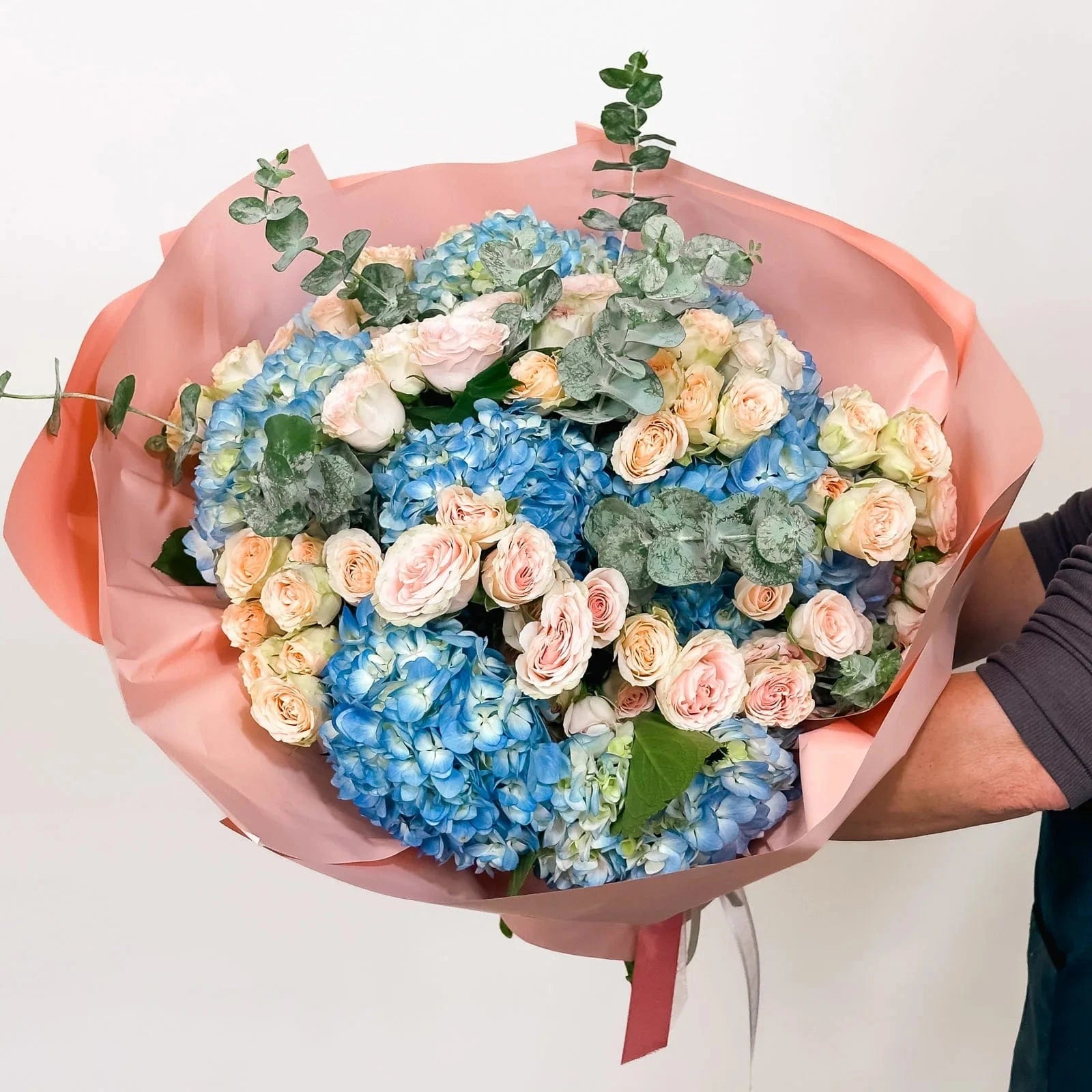
Start with foliage to set the overall shape. Then place your focal flowers, turning the vase as you go so the weight is balanced on all sides. A few sunflowers go a long way — their height and scale fill a vertical arrangement without needing much behind them. Hydrangea works differently — its wide, dense heads spread across the arrangement and quietly cover the kind of empty patches that would otherwise give the whole thing away. Add filler last, at varying heights. Step back more than feels necessary.


How to Keep Your Arrangement Looking Fresh
Change the water every two days. Each time, take a little off the bottom of each stem and pull out anything that has begun to fade. A single bloom past its peak introduces bacteria that works through the rest of the arrangement faster than most people expect — editing it out early is worth it.
Keep flowers away from windowsills in direct sun, heating vents, and anything ripening on the counter. Cut flowers and a fruit bowl make poor neighbors — the gases produced during ripening cause petals to drop days earlier than they otherwise would. If the arrangement came with a flower food sachet, use it. The balance of ingredients in those packets is harder to replicate at home than most tutorials suggest. For a complete deep-dive on maximizing vase life, check out our florist guide on how to keep a bouquet fresh longer.
A well-prepared arrangement with attentive water changes can last seven to twelve days, depending on the variety. When you'd rather skip the sourcing and conditioning entirely, our same-day flower delivery arrives ready to arrange — stems already cut and conditioned.


2026 Arranging Trends Worth Trying at Home
The most interesting shift in home floral design this year is about scale. Oversized vessels — wide ceramic urns, tall glass cylinders that resemble outdoor planters — are showing up in interiors in a way that feels deliberate rather than decorative. A large container with fewer stems often reads as more considered than a tightly packed arrangement in a small vase. Before adding more stems to a space that feels empty, try scaling up the vessel first.
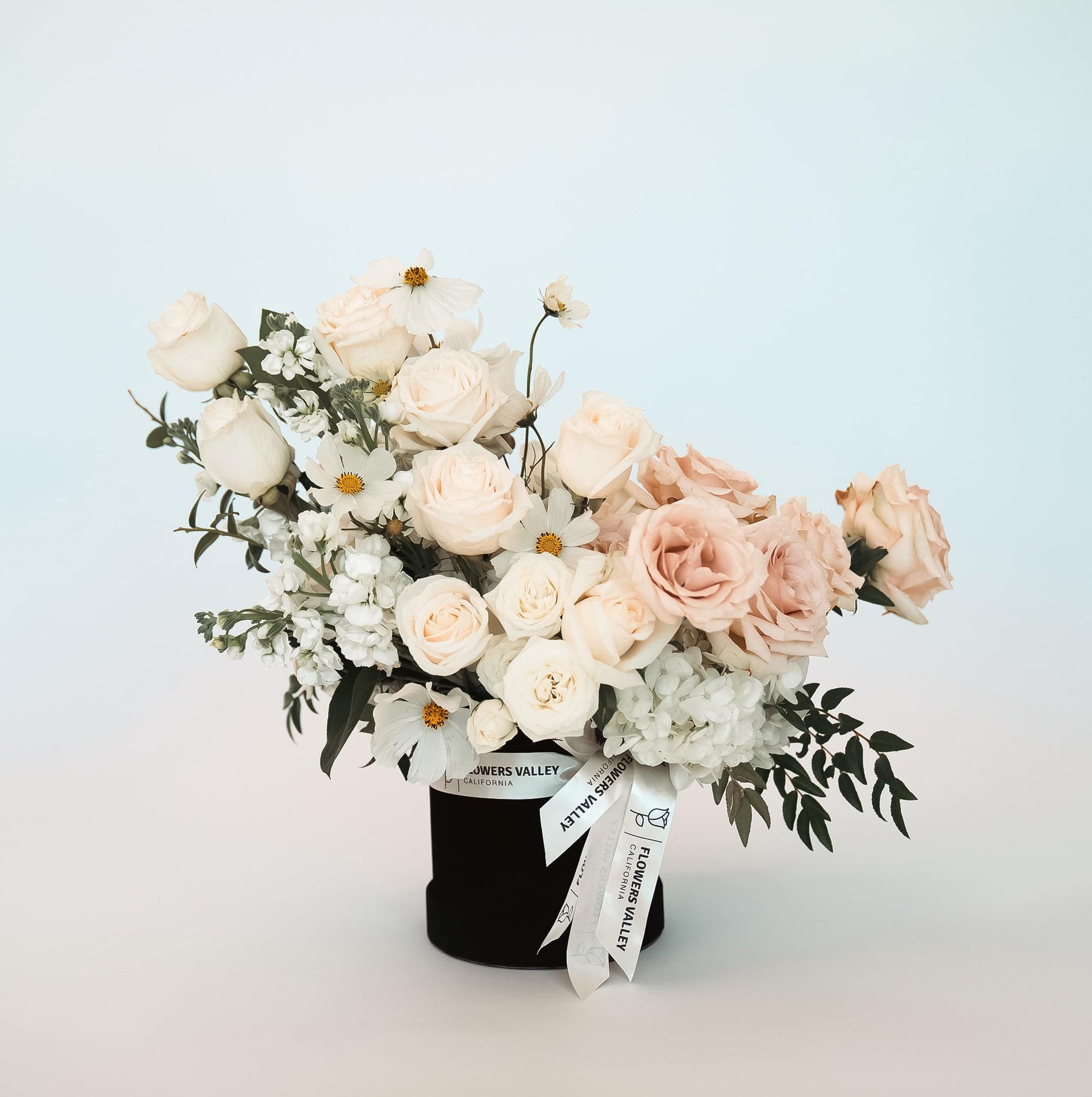
The palette leaning toward cream garden roses, muted dahlias, and olive-toned foliage reflects a broader preference for arrangements that don't compete with their surroundings. It works in most rooms because it doesn't ask much of the space.
Delphinium — named the 2026 Flower of the Year by 1-800-Flowers — adds height and a blue-to-violet depth that very few other flowers offer at that scale. It's worth trying in a tall vase on its own before mixing it with other stems. For a curated version of what these seasonal choices look like together, our Signature Collection is a good reference point.
Frequently Asked Questions
What flowers are easiest to arrange at home for beginners?
Tulips, sunflowers, and hydrangea give beginners the most room for error — the stems are predictable, the blooms are sturdy, and none of them demand precise technique to look right. Starting with just one variety in a single vase is often where the best results come from.
How long do flower arrangements last at home?
With regular water changes and stem trims, most arrangements hold up for five to ten days — longer for hardier varieties like chrysanthemums, shorter for open garden roses. Water quality matters more than most people realize.
Can I arrange flowers without floral foam?
Yes — and many florists stopped using it years ago. A crosshatch of clear tape over the vase opening keeps stems exactly where you place them. A floral frog pinned to the base works well for heavier stems and gives you more precise placement.
How do I make grocery store flowers look more expensive?
Edit before you arrange. Pull off extra foliage, clear everything below the waterline, and reduce the stem count if the bunch feels like too much. An arrangement that breathes always reads better than one that's packed — and the container you choose carries as much visual weight as the flowers inside it.




0 comments